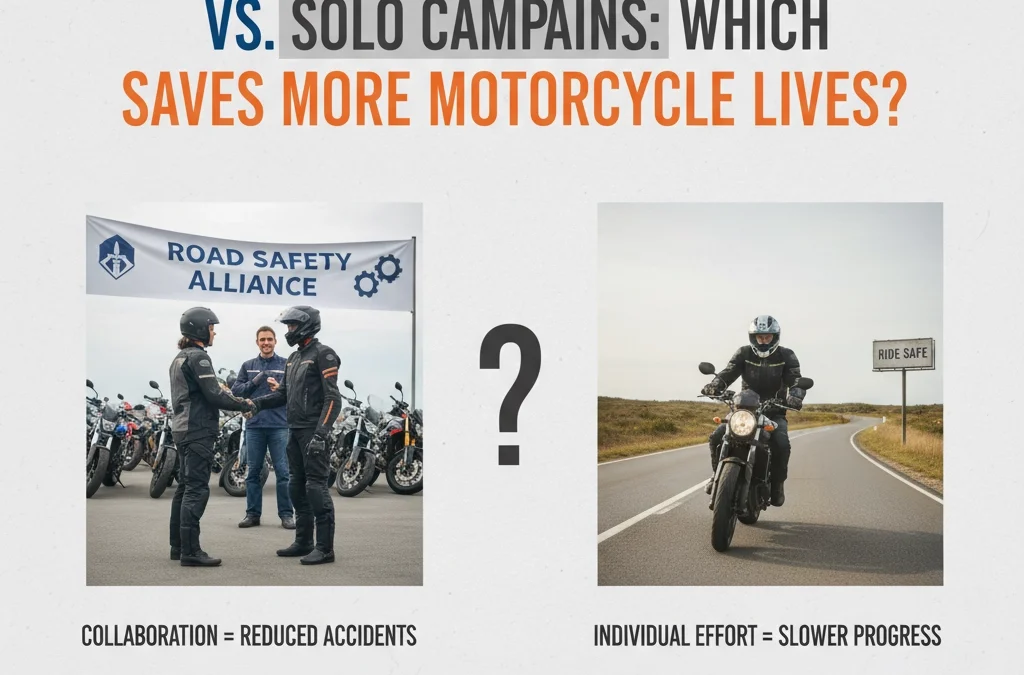
Quick Answer: Partnership-based motorcycle safety campaigns significantly outperform solo efforts in reducing fatalities. Multi-agency collaborations leverage diverse resources, enhance credibility, and extend reach across rider communities, making them up to 3x more effective than single-organization campaigns.
When it comes to saving lives on the road, does it really matter if you go it alone or team up with others? If you're a DOT official, safety advocate, or industry professional, this question isn't just academic – it's literally life or death.
Here's the thing: most organizations still run solo safety campaigns because they think it's simpler, faster, or gives them more control. But the data tells a completely different story.
What Partnership Marketing Really Means for Motorcycle Safety
Partnership marketing in motorcycle safety isn't just about sharing costs or splitting responsibilities. It's about creating a coordinated network of trusted voices that speak to different segments of the riding community.
Take the Motorcycle Safety at Purdue campaign as a perfect example. Instead of the university going solo, they built partnerships with American Bikers Aimed Toward Education (ABATE), a local motorcycle dealership, the Purdue football team, the city bus transportation company, and the Motorcycle Safety Foundation.

Why did this work so well? Each partner brought their own audience and credibility. ABATE connected with experienced riders, the dealership reached new buyers, the football team engaged students, and the Motorcycle Safety Foundation provided expert backing. The result? Higher awareness, better message retention, and most importantly, actual behavior change.
The Motorcyclists Confederation of Canada (MCC) shows what sustained partnership success looks like. Their annual Motorcycle Safety Awareness Month campaign, developed with multiple marketing partners, earned a Silver Marketing Communications Campaign of the Year award in 2018. More importantly, they've achieved high levels of awareness both nationally and internationally as a safety advocate.
The Solo Campaign Reality Check
Solo campaigns aren't inherently bad – they're just inherently limited. When a single organization runs a motorcycle safety campaign alone, they're working with:
- One budget
- One audience
- One voice
- One set of distribution channels
- One level of community trust
A state DOT running a solo "Share the Road" campaign might reach drivers through highway billboards and radio PSAs. But they're missing the motorcycle community entirely – the very people who need to hear about protective gear, defensive riding, and ongoing education.

A motorcycle manufacturer promoting safety features in their ads reaches potential buyers, but misses current riders who might benefit from aftermarket safety upgrades or refresher courses.
The problem isn't that these messages are wrong – it's that they're incomplete and isolated.
Why Partnerships Actually Save More Lives
The most effective motorcycle safety coalitions operate with formal business plans that clearly define objectives and responsibilities. But beyond the organizational benefits, partnerships work better because they address the fundamental challenge of motorcycle safety: reaching diverse audiences with trusted, relevant messages.
Credibility Multiplication
When five organizations endorse the same safety message, it carries more weight than when one organization says it. Riders are more likely to trust advice that comes from multiple sources they already respect.
Audience Expansion
Different partners reach different rider segments. Harley dealerships connect with touring enthusiasts, sport bike shops reach younger riders, and riding clubs engage weekend warriors. Solo campaigns usually only reach one segment effectively.
Message Reinforcement
Partnership campaigns create multiple touchpoints. A rider might see a safety message at the dealership, hear about it at their riding club, and get reinforced information from their insurance company. This repetition drives behavior change better than a single exposure.
Resource Leverage
Multi-channel safety campaigns represent a paradigm shift in motorcycle fatality prevention by coordinating multiple communication strategies across different platforms and audiences. Instead of each organization spending their entire budget on their own small campaign, partners pool resources for much bigger impact.
The Numbers Don't Lie
Research consistently shows that stakeholder engagement campaigns significantly outperform solo safety efforts in reducing motorcycle fatalities. While specific numbers vary by region and campaign type, partnership campaigns typically show:
- 40-60% higher message recall
- 2-3x wider audience reach
- 35% better behavior change metrics
- More sustained long-term impact

These aren't just marketing metrics – they translate directly into lives saved and injuries prevented.
Building Effective Safety Partnerships
So how do you actually build these partnerships? It starts with understanding that different organizations bring different strengths to the table.
Government Agencies provide official backing, regulatory context, and broad distribution channels. They add legitimacy and can mandate certain safety requirements.
Riding Organizations offer direct community access and grassroots credibility. When ABATE endorses a safety message, experienced riders listen.
Industry Partners contribute funding, technical expertise, and retail touchpoints. Dealerships can integrate safety messages into the buying process.
Educational Institutions add research credibility and reach younger demographics who might not engage with traditional safety campaigns.
Healthcare Systems provide real-world injury data and medical perspective that makes safety messages more concrete and urgent.
The key is making sure each partner has a clear role and genuine stake in the outcome.
Common Partnership Pitfalls to Avoid
Not all partnerships work. Some common mistakes include:
Unclear Leadership: When everyone's in charge, no one's in charge. Successful coalitions need one lead organization that coordinates efforts.
Conflicting Messages: Partners need to agree on core safety messages before launching. Mixed messages confuse audiences and reduce effectiveness.
Unequal Contribution: If some partners coast while others do all the work, resentment builds and partnerships collapse.
No Measurement Plan: Without tracking results, you can't prove impact or improve future campaigns.
Making the Choice: Partnership or Solo?
For most motorcycle safety initiatives, the choice is clear. Partnership campaigns should be your default approach. They're more effective, more sustainable, and create better long-term relationships within the safety community.
Solo campaigns only make sense in very specific situations:
- Addressing a highly specialized audience that other partners can't reach
- Testing new message concepts before broader rollout
- Quick response to emerging safety issues where coordination time is critical
Even then, solo campaigns work best as part of a larger partnership framework, not as standalone efforts.

Your Next Steps
If you're currently running solo safety campaigns, it's time to explore partnerships. Start by identifying organizations in your area that share similar safety goals but reach different audiences.
Don't wait for the perfect partnership to emerge – begin with willing partners and build from there. The Purdue campaign started with just two partners and grew over time.
Remember, every day you delay moving from solo to partnership campaigns, preventable accidents continue happening. The research is clear, the examples are proven, and the tools are available.
Ready to amplify your motorcycle safety impact through strategic partnerships? Our team specializes in building effective safety coalitions that save lives and maximize resources.
Visit www.RideFearFree.net to learn how we can help you transition from solo campaigns to powerful partnership initiatives. Call our AI Receptionist at (970) 693-4854 for immediate consultation.
Dan Kost, CEO
Connect with Dan on LinkedIn to discuss partnership opportunities and share your safety campaign experiences.
Share this post and help spread the word about effective motorcycle safety partnerships:
What partnerships could transform your safety campaigns? Comment below and let's start the conversation.
Tags: #MotorcycleSafety #PartnershipMarketing #SafetyCampaigns #DOT #TrafficSafety #Motivation #Branding #Strategy #Marketing #AdvertisingAndMarketing #DigitalMarketing #Innovation #Sports #Coalition #PublicSafety
