
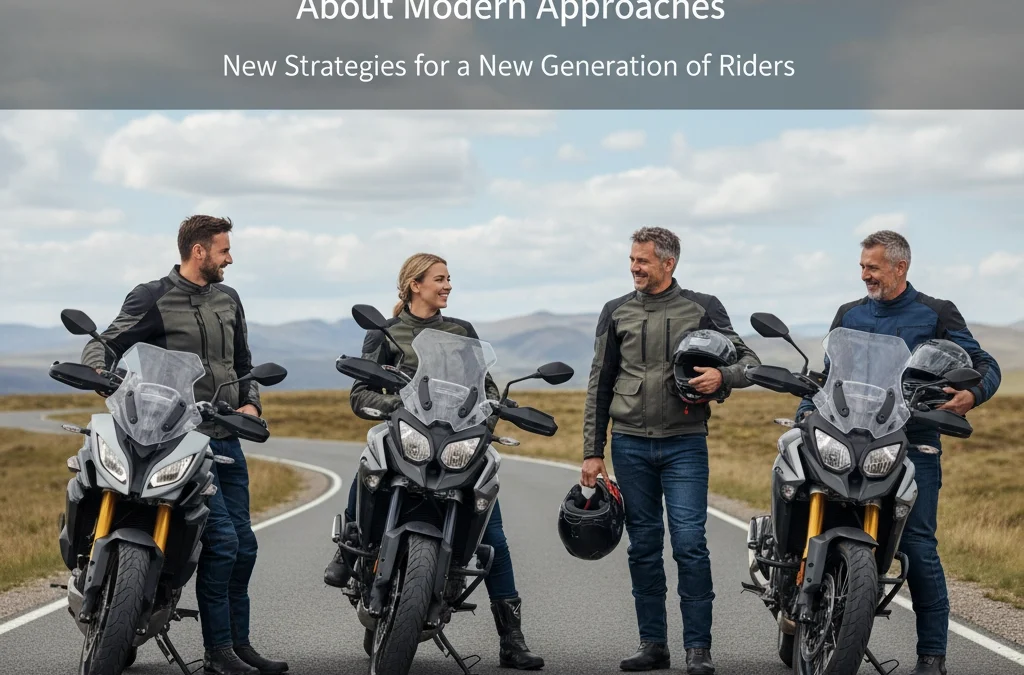
AEO Quick Answer: Traditional motorcycle safety campaigns aren't dead, but they're increasingly recognized as insufficient when used alone. Research shows awareness campaigns have "only modest impact" on crashes without enforcement and infrastructure support. Modern approaches combine digital targeting, technology integration, and multi-faceted interventions for measurable safety improvements.
The Uncomfortable Truth About Traditional Safety Messaging
Marketing officers promoting motorcycle safety face a sobering reality: decades of "Look Twice, Save a Life" and "Share the Road" campaigns have produced mixed results at best. While these messages remain visible across highways and social media feeds, mounting research reveals their fundamental limitations.
The evidence tells a complex story. California's "Share the Road" campaign achieved a 10% reduction in motorcycle fatalities, and New York City's Vision Zero program reported a 22% drop in motorcycle-related deaths. These numbers sound encouraging until you examine the broader research landscape.
According to NHTSA's "Countermeasures that Work" report, education and awareness campaigns are often viewed as "low-hanging fruit" that are "easy and low cost to implement, but they rarely work in isolation." This assessment cuts to the heart of why traditional approaches struggle to deliver proportional returns on investment.

Why Traditional Campaigns Fall Short
The Skilled Motorcyclist Association's research directly challenges the foundational assumptions underlying most traditional campaigns. These initiatives typically rest on two incorrect beliefs: first, that motorists simply don't realize motorcyclists are on the road, and second, that informing drivers will automatically change their behavior.
Research by Delhomme and colleagues, examining 265 evaluated road safety campaigns, concluded that "a road safety publicity campaign, by itself, has only modest impact on attitudes and behaviour and no significant impact on crashes." This finding represents decades of accumulated evidence that awareness alone doesn't translate to behavioral change.
Consider the ongoing alcohol-impaired riding crisis. Traditional campaigns aren't effectively addressing this significant contributor to fatalities, suggesting their messaging frameworks lack the sophistication needed to tackle complex risk factors. Additionally, 18-26 year old male riders remain the most at-risk demographic, indicating that conventional awareness messaging may not be reaching or resonating with vulnerable populations.
The Modern Marketing Officer's Dilemma
Today's marketing professionals face pressure to demonstrate measurable safety outcomes while working with limited budgets. The challenge isn't whether to abandon awareness campaigns entirely, but how to position them within integrated strategies that produce documented results.
Smart marketing officers recognize that 2025 represents a shift toward evidence-based, technology-enabled approaches. Digital-first campaigns now leverage platforms to promote advanced safety features including smart helmets, communication systems, and real-time hazard detection. These platforms allow for targeted messaging to younger demographics through their preferred channels.

What Actually Works: The Integration Model
The most effective modern campaigns combine behavioral messaging with enforcement of traffic laws, provision of safety services and products, and infrastructure improvements. The Vision Zero movement exemplifies this approach, addressing structural barriers rather than relying solely on individual behavior change.
Organizations like the Motorcycle Safety Foundation emphasize that awareness programs should complement hands-on rider training through initiatives like RIDE Days. This recognition acknowledges that skills training produces more reliable safety outcomes than messaging alone.
Infrastructure-based solutions represent another evolution in modern campaigns. Rather than asking riders and drivers to compensate for dangerous road designs, advanced programs advocate for physical improvements that enhance safety for motorcyclists.
Strategic Recommendations for Marketing Officers
Reframe Expectations Around Awareness Campaigns
Don't position awareness campaigns as standalone solutions. Frame them as components of comprehensive safety ecosystems. This shift in positioning protects your credibility while setting realistic expectations for stakeholders.
Target High-Risk Demographics Strategically
Rather than broad "motorcycle safety month" messaging, develop campaigns specifically designed for at-risk groups. Utilize data-driven audience segmentation and platform selection to reach 18-26 year old male riders where they actually consume content.
Measure Behavioral Change, Not Just Awareness
The goal should be documented reductions in crash rates and safety violations, not merely increased awareness metrics. Awareness without corresponding behavioral change indicates campaign ineffectiveness, regardless of reach or engagement numbers.

Leverage Technology and Real-Time Data
2025 campaigns increasingly incorporate smart technology messaging and real-time information systems. These represent more sophisticated persuasion strategies than traditional static messaging, offering opportunities for dynamic content that adapts to current conditions.
Partner with Enforcement and Engineering
The most effective campaigns coordinate with traffic law enforcement agencies and transportation planners. Ensure that messaging aligns with enforcement priorities and that roads support safe riding practices.
The Technology Integration Advantage
Modern motorcycle safety campaigns benefit from technological integration that wasn't available to previous generations of marketing professionals. Smart helmets with communication capabilities, real-time hazard detection systems, and mobile apps that provide instant safety information represent new channels for safety messaging.
These technologies offer marketing officers opportunities to embed safety messaging within functional tools that riders actually use. Rather than interrupting riders with awareness messages, integrated approaches provide safety information as part of valuable services.
Budget Allocation in the Modern Era
Marketing officers should allocate resources toward interventions with stronger evidence bases while remaining realistic about what messaging alone can achieve. This doesn't mean abandoning awareness campaigns, but rather investing proportionally in elements that demonstrate measurable impact.
Consider allocating larger portions of safety budgets toward training partnerships, technology integration, and infrastructure advocacy. These investments often produce more documentable safety improvements than equivalent spending on traditional awareness messaging.
Looking Forward: The Evolution Continues
Traditional motorcycle safety campaigns continue to exist because they're relatively inexpensive and maintain institutional visibility, not necessarily because evidence demonstrates their standalone effectiveness. Marketing officers operating in 2025 should view awareness campaigns as one tool within a larger strategy.
The future belongs to integrated approaches that combine multiple intervention types, leverage technology for targeted delivery, and measure actual behavioral outcomes rather than just awareness metrics. Organizations that embrace this evolution will achieve better safety results and demonstrate clearer return on investment.
No matter who you are or where you work in motorcycle safety, the evidence points toward the same conclusion: awareness campaigns work best when they're part of something bigger. The question isn't whether traditional campaigns are dead, but whether you're ready to evolve beyond them.
Ready to revolutionize your motorcycle safety campaigns? Contact Ride Fear Free, LLC for expert guidance on modern safety marketing approaches that deliver measurable results.
Contact Information:
- Website: www.RideFearFree.net
- AI Receptionist: +1 (970) 693-4854
- CEO: Dan Kost
- Connect with Dan on LinkedIn: [Dan Kost's LinkedIn Profile]
Share This Post:
Tags: #Motivation #Branding #Strategy #Marketing #AdvertisingAndMarketing #digitalmarketing #Innovation #Sports #MotorcycleSafety #CampaignStrategy #SafetyMarketing #RoadSafety #MotorcycleAwareness #SafetyCampaigns
