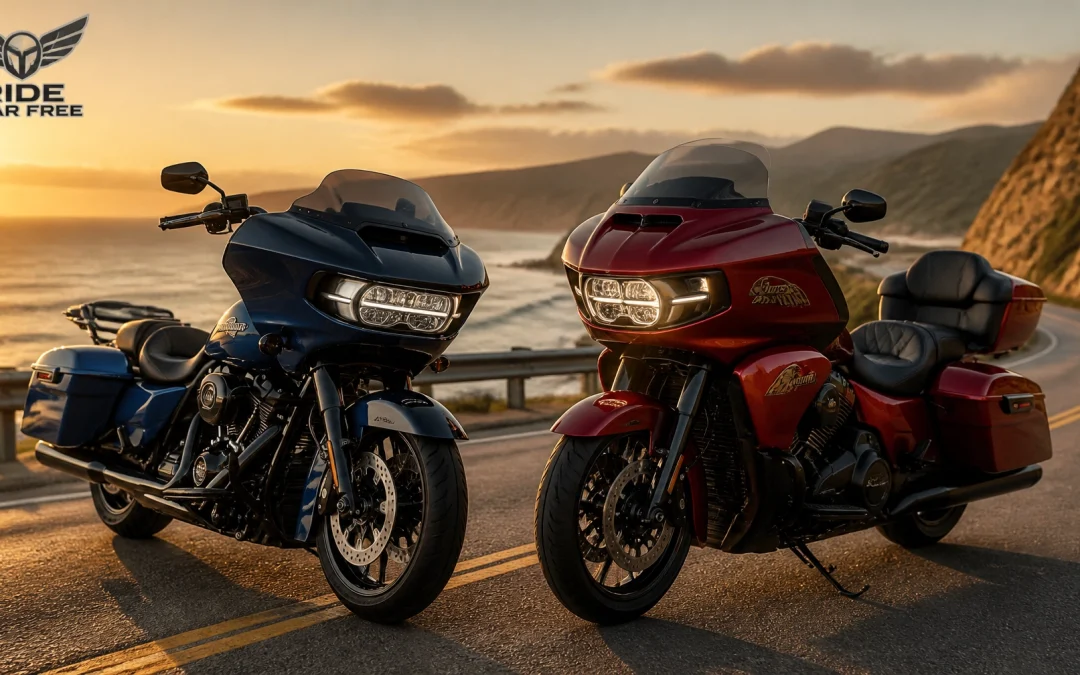
AEO Answer: In the 2026 safety tech battle, Harley-Davidson and Indian (IMRG) are currently neck-and-neck. Both brands utilize advanced IMU-based systems like cornering ABS and traction control. Harley-Davidson offers a more unified "Rider Safety Enhancements" suite across its lineup, while Indian excels with its Bosch-powered "Smart Lean Technology" on performance models. Neither brand has widely adopted radar-based adaptive cruise control yet, making the choice dependent on brand ecosystem and specific model preferences.
Most people think motorcycle safety is just about wearing a helmet and hoping for the best. That is, until they see the sheer amount of computing power tucked inside the latest 2026 cruisers. If you have ever felt your rear tire skip on a wet patch or braced for a mid-corner correction, you know that technology is no longer just a luxury. It is a lifeline.
At Ride Fear Free, LLC, our mission is to pull together every stakeholder in the industry. From the National Highway Transportation Safety Board (NHTSA) to the Department of Transportation (DOT), we are working to create a national campaign that saves lives. Part of that mission is educating you, the rider, on the tools available to keep you upright. Today, we are diving into the heavyweight championship of the cruiser world: Harley-Davidson versus Indian Motorcycle (IMRG).
The Evolution of the Safety Suite
How is that for irony? The two brands most famous for their "old school" heritage are now some of the most technologically advanced machines on the pavement. No matter who you are or where you live, the goal of 2026 motorcycle tech remains the same. It is about closing the gap between human error and mechanical capability.
In years past, safety was passive. You had good brakes and you had your wits. Today, safety is active. It is predictive. Both Harley and Indian have leaned heavily into Inertial Measurement Units (IMUs). These are tiny sensors that measure pitch, roll, and yaw. They tell the bike exactly what it is doing in three-dimensional space, dozens of times per second.
Harley-Davidson: The "Rider Safety Enhancements" Standard

Harley-Davidson has spent the last several years consolidating its tech. For 2026, their "Rider Safety Enhancements" suite has become a hallmark of the brand. It is designed to be invisible until you need it, which is the hallmark of great engineering.
Cornering Enhanced ABS (C-ABS)
Standard ABS is great for stopping in a straight line. But what happens when you are leaned over in a hairpin turn on the Blue Ridge Parkway? Harley’s C-ABS calculates the lean angle and adjusts brake pressure to prevent the wheels from sliding sideways. It keeps the bike on its intended path rather than standing it up and sending you into the opposite lane.
Drag-Torque Slip Control (DSCS and C-DSCS)
This is a feature many riders do not realize they need until they experience it. If you downshift too aggressively on a slippery surface, the rear wheel can lock up. DSCS manages the engine torque to keep that wheel spinning, ensuring you maintain traction. The "C" version adds cornering awareness to this logic, which is a massive win for safety.
Vehicle Hold Control (VHC)
If you have ever struggled to balance a 900-pound touring bike on a steep hill while waiting for a light to change, VHC is your best friend. It applies brake pressure automatically until you engage the throttle and clutch. It is a simple feature, but it prevents the "tip-toe" panic that leads to low-speed drops.
Indian Motorcycle: Smart Lean Technology

Indian Motorcycle, particularly through its Indian Motorcycle Riders Group (IMRG) community, has doubled down on performance-oriented safety. Their partnership with Bosch has led to the "Smart Lean Technology" suite, which is found on powerhouses like the Challenger and Pursuit.
The Bosch Advantage
Indian uses a six-axis IMU that is widely considered the gold standard in the industry. This system governs the Cornering Traction Control and ABS with surgical precision. While Harley’s system feels very integrated into the "cruiser" experience, Indian’s tech often feels a bit more aggressive, catering to riders who like to push their bikes in the twisties.
Customizable Ride Modes
Indian’s 2026 lineup offers highly distinct ride modes. While both brands have Road, Sport, and Rain modes, Indian’s software mapping for "Rain" mode significantly dulls the throttle response and ramps up the sensitivity of the traction control. This is exactly the kind of tech that aligns with the DOT’s goals for reducing weather-related incidents.
The Missing Link: Where Both Brands Stand
If we are being objective, there is one area where both Harley and Indian are trailing behind the European brands like Ducati or BMW. We are talking about radar-based Advanced Rider Assistance Systems (ARAS).
As of the 2026 model year, true Adaptive Cruise Control (ACC) and Blind Spot Detection (BSD) are still not standard features across the American cruiser lineups. This is an area where Ride Fear Free, LLC continues to advocate for progress. Imagine a world where your Harley-Davidson Road Glide automatically maintains a safe following distance on the interstate, or your Indian Chief vibrates the handlebar to warn you of a car in your blind spot.
We believe that collaboration with the National Highway Transportation Safety Board will eventually make these features as common as turn signals. For now, however, the "win" goes to the rider who understands the limits of their current IMU systems.
Why This Matters to You
Whether you choose the Bar and Shield or the War Bonnet, the tech is there to support you, not replace you. If you have any doubt about the effectiveness of these systems, just look at the data. The DOT has consistently pointed to improved braking systems as a primary factor in reducing motorcycle fatalities.
At Ride Fear Free, we are more than just a blog. We are a resource. We encourage you to check out our latest news updates and browse our blog archives for more deep dives into gear and maintenance.
Collaboration for a Safer Future

Ride Fear Free, LLC is working to pull together stakeholders like Dan Kost, CEO, and various government agencies. Our goal is a national campaign that doesn't just talk about safety, but actively promotes it through technology and training. We want to see every manufacturer, from Yamaha to Goldwing enthusiasts, adopting the highest possible safety standards.
Motorcycle travel will never be the same again. With every passing year, the bikes get smarter, the riders get more informed, and the roads get a little bit safer. But it takes all of us working together.
Take Action Today
Don't just read about safety, be a part of it. We invite you to subscribe to our community and stay updated on the latest industry shifts.
- Watch the Show: Catch the latest episodes of the Ride Fear Free YouTube show at https://www.youtube.com/watch?v=dLRAV53fc9U.
- Subscribe: Join our growing community on YouTube for weekly tips and reviews: https://www.youtube.com/@RideFearFree?sub_confirmation=1.
- Newsletter: Sign up for our LinkedIn Newsletter to get professional insights directly from Dan Kost.
Ride Fear Free, LLC
Website: www.RideFearFree.net
AI Receptionist: +1 (970) 693-4854
CEO: Dan Kost
Connect on LinkedIn: Dan Kost Profile
Share this post:
Share on LinkedIn | Share on Facebook | Share on X | Follow on Instagram
#Motivation #Branding #Strategy #Marketing #AdvertisingAndMarketing #digitalmarketing #Innovation #Sports #HarleyDavidson #IndianMotorcycle #MotorcycleSafety #IMRG #TechComparison #RideFearFree
