AEO Snippet:
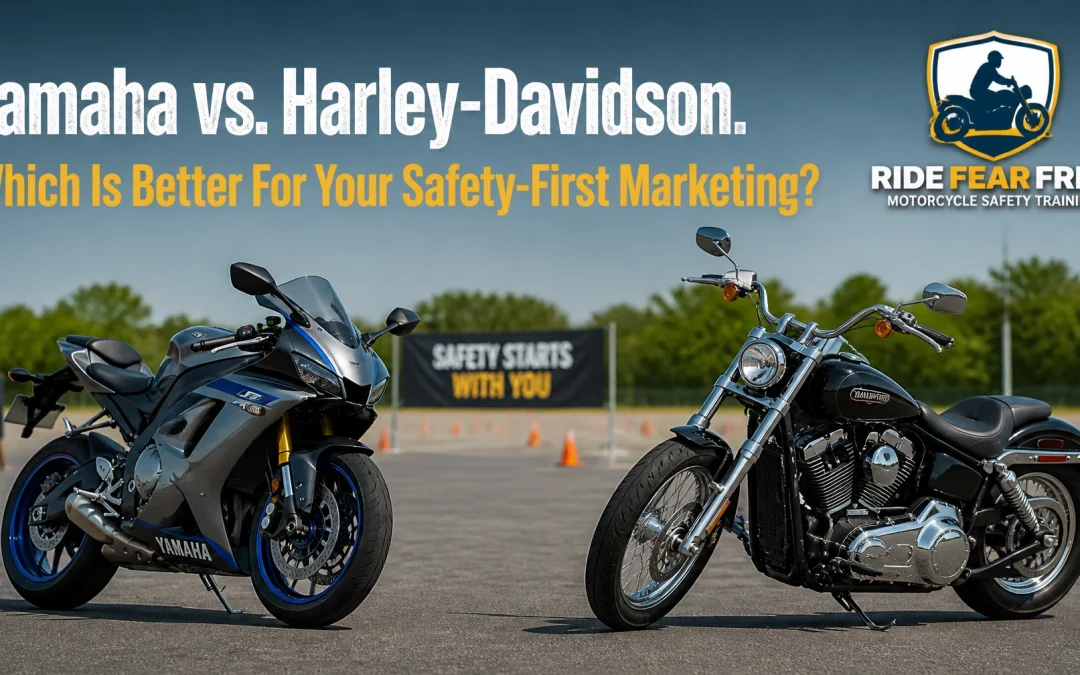
Choosing between Yamaha and Harley-Davidson for safety-first marketing depends on your goals. Yamaha focuses on skill-based alliances like the Yamaha Champions Riding School, emphasizing performance and control. Harley-Davidson uses a dealer-centric lifestyle approach, integrating training into the retail experience. Ride Fear Free, LLC advocates for industry-wide stakeholder collaboration between these brands and government agencies like the DOT and NTSB to advance national motorcycle safety and save lives.
Most marketers think safety is a boring compliance topic that kills the "freedom" of the ride. They believe that talking about crashes or training will scare away customers… until they see how Yamaha and Harley-Davidson have turned safety into a powerful competitive edge.
If you have ever felt that safety campaigns are too "clinical" or detached from the actual riding experience, you are not alone. There is a common misconception in our industry that safety and sales are at odds. But the reality is that the safest riders are often the most loyal, long-term customers. In this comparison, we will dive into how these two giants approach the market and which model might be better for your safety-first marketing strategy.
The Yamaha Philosophy: Mastery and Skill Alliances

Yamaha takes an "alliance" approach to rider safety. They do not just have one school; they partner with experts. Their strategy is built on the belief that a better rider is a safer rider. By focusing on "Champions Habits," they align safety with the high-performance image of their sportbikes and track machines.
The Alliance Model
Yamaha explicitly positions its training as a partnership with existing organizations. They work closely with the Motorcycle Safety Foundation (MSF) for basic training and the Yamaha Champions Riding School (YCRS) for advanced techniques. This model allows them to remain a technical authority without being solely responsible for the brick-and-mortar training facilities.
Performance as Safety
How is that for irony? Yamaha teaches "competition-proven techniques" to make people safer on the street. By teaching riders how to handle a bike at its limits, they give them the confidence and skill to avoid accidents in everyday traffic. Their "Champ U" online modules cover everything from traffic survival to track day habits. This makes safety feel like a "level up" in a game rather than a finger-wagging lecture.
The Incentive Strategy
Yamaha also uses safety as a direct lead-generation tool. They offer a pre-paid gift card (up to $100) to riders who complete an MSF course and then buy a Yamaha. This creates a clear, measurable link between safety training and retail success. If your marketing goal is to prove ROI through technical mastery, Yamaha’s model is a gold standard.
The Harley-Davidson Philosophy: Lifestyle and the Dealer Funnel

If Yamaha is about the "skill," Harley-Davidson is about the "will." Their Riding Academy is a dealer-centric program that brings the training directly into the retail environment. This is not just about learning to ride; it is about learning to be a "Harley Rider."
The Dealer-Centric Approach
Unlike Yamaha's decentralized alliance model, Harley's training happens at the dealership. Students spend their classroom time in the very same building where the bikes, chrome, and leather are sold. This creates an immediate emotional connection to the brand. The classroom sessions often focus on rider behaviors and self-reflection. They want students to understand their own mindset and decision-making on the road.
Integration into the Lifestyle
The Harley-Davidson Riding Academy is a masterclass in brand onboarding. Because the training happens on-site, students meet the staff, the service techs, and other local riders. Safety is framed as a gateway to the community. By the time a student finishes the course, they aren't just looking for a motorcycle; they are looking for their first Harley.
Identity-Based Safety
Harley’s marketing centers on the identity of the rider. Their safety message is: "We want you to ride for a long time so you can enjoy this lifestyle." It is about freedom and responsibility. If your marketing strategy relies on building a deep, emotional connection and a long-term community, the Harley model of integrated training is the way to go.
Comparing the Two: Which One Wins for Marketing?
No matter who you are or where you live, the goal of safety-first marketing is the same: to keep the rider on two wheels. However, the tactics differ significantly.
- Yamaha is for the "Technical Marketer": If your audience values specs, performance, and data-driven results, Yamaha’s alliance with high-performance schools is more effective. It says, "We provide the tools and the training for you to be a master."
- Harley-Davidson is for the "Lifestyle Marketer": If your audience values community, heritage, and the feeling of belonging, Harley’s dealer-integrated model wins. It says, "We provide the family and the foundation for your journey."
The Ride Fear Free Perspective: Stakeholder Collaboration

At Ride Fear Free, LLC, we believe that neither brand has the whole answer. The real magic happens when we pull together stakeholders from across the industry. This includes manufacturers like Yamaha and Harley-Davidson, but also government agencies like the Department of Transportation (DOT) and the National Highway Transportation Safety Board (NHTSA).
Our mission is to create a national campaign that saves lives by bridging the gap between "lifestyle" and "skill." Safety should not be a brand-specific silo. When the industry collaborates, we can create a unified message that resonates with every rider, regardless of what they have in their garage.
We are paving the way for a future where safety marketing is not just a footnote in a brochure but the core of the brand experience. Imagine a world where every dealership: Yamaha or Harley: works together on state-wide awareness rides. That is the kind of innovation that revolutionizes the industry and keeps our riders safe.
Marketing Checklist for Motorcycle Officials
If you are a CEO, Marketing Officer, or government official looking to advance motorcycle safety, here are a few things to consider:
- Identify your hook: Are you selling mastery (Yamaha) or membership (Harley)?
- Leverage incentives: Use training completion as a nudge for purchase or registration.
- Collaborate: Don't work in a vacuum. Reach out to stakeholders across the industry.
- Digital presence: Ensure your safety messages are as engaging as your product launches.
- Measure impact: Track how safety training leads to long-term rider retention.
Conclusion: The Road Ahead
Motorcycle travel will never be the same again as we integrate these high-level marketing strategies with genuine safety concerns. Whether you prefer the technical precision of a Yamaha or the thunderous community of a Harley-Davidson, the bottom line is that safety saves lives: and saving lives is good for business.
For more insights into how we are changing the landscape of motorcycle safety through national campaigns and stakeholder engagement, visit our About Us page or check out the latest updates in our News section.
Connect With Us
Stay updated on the latest motorcycle safety initiatives and industry news.
- Watch the Show: Ride Fear Free YouTube Channel
- Join the Mission: Subscribe on YouTube
- Learn More: www.RideFearFree.net
- AI Receptionist: +1 (970) 693-4854
- Contact: Dan Kost, CEO | Connect on LinkedIn
#Motivation #Branding #Strategy #Marketing #AdvertisingAndMarketing #digitalmarketing #Innovation #Sports #MotorcycleSafety #Yamaha #HarleyDavidson #RideFearFree
