
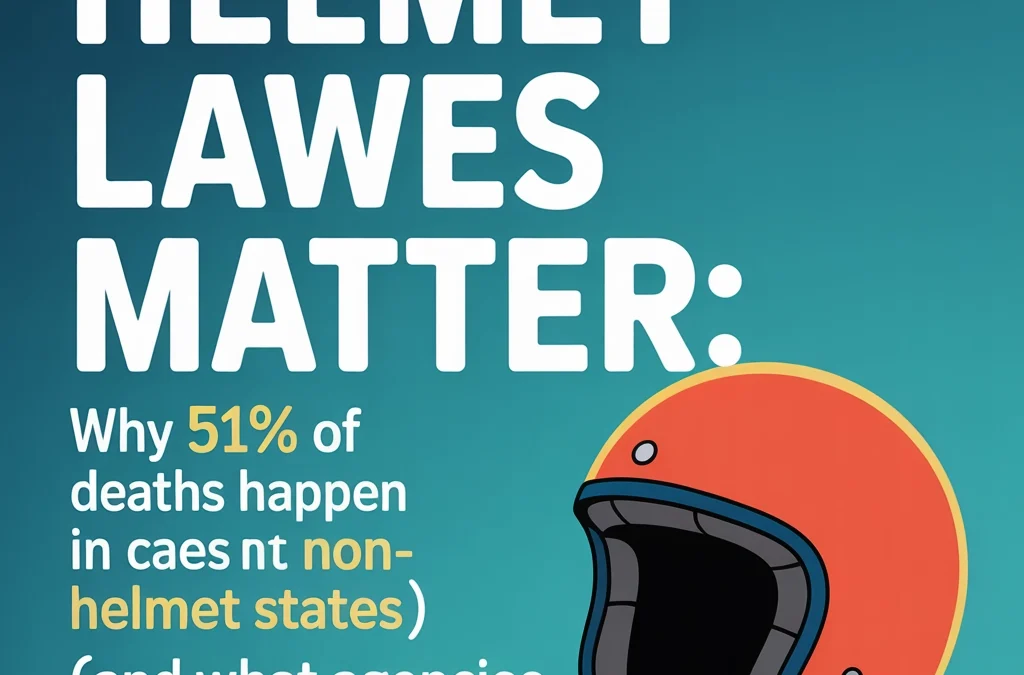
Quick Answer: States without comprehensive helmet laws experience dramatically higher motorcycle fatality rates. Research shows that 79% of fatally injured motorcyclists in states with no helmet laws weren't wearing helmets, compared to just 12% in states with universal helmet requirements. Helmet use reduces death likelihood by 29%, and over 22,000 lives could have been saved since 1976 with stronger helmet legislation nationwide.
The numbers don't lie, and they paint a sobering picture of preventable tragedy on American roads. When it comes to motorcycle safety, the correlation between helmet laws and survival rates reveals one of the most clear-cut public health crises we face today.
The Stark Reality of Helmet Law Disparities
The data tells a devastating story. Between 2008 and 2010, fatally injured motorcyclists in states with partial helmet laws were more than five times as likely not to have been wearing a helmet compared to those in universal helmet law states: 64% versus a mere 12%. Even more alarming? In states with no helmet requirements, that figure jumps to 79%.
This isn't just statistics on a page. We're talking about real people: fathers, mothers, sons, and daughters: whose lives could have been saved with proper protective equipment and supportive legislation.
Consider the most dangerous states in recent years. Florida, Texas, and Colorado exemplify how inadequate helmet laws translate into human casualties. In Florida alone, nearly half (48%) of riders involved in fatal crashes weren't wearing helmets. Colorado reported 52% non-helmet use in fatal crashes, while Texas showed helmet use in only 67% of fatal incidents.

The economic burden extends far beyond individual tragedy. States with universal helmet laws demonstrate significantly greater economic savings, averaging $725 per registered motorcycle: nearly four times greater than states without such laws, which average only $198 per motorcycle in savings.
The Science Behind Helmet Protection
How effective are helmets, really? The research provides a definitive answer: motorcycle helmet use reduces the likelihood of death in an accident by 29%. Non-helmeted riders are three times more likely to incur a brain injury compared to their protected counterparts.
These aren't marginal improvements: they're the difference between life and death, between walking away from a crash or spending months in rehabilitation, between maintaining cognitive function or facing permanent disability.
A comprehensive analysis spanning 1976 to 2022 reveals staggering potential. If every state had required all riders to wear helmets during this period, 22,058 motorcyclists' lives could have been saved: representing 11% of all rider fatalities over those decades. Currently, only 17 states and the District of Columbia maintain all-rider helmet laws.
What This Means for Agencies and Policymakers
Legislative action represents the most immediate solution. If the remaining 33 states without universal helmet laws adopted comprehensive legislation tomorrow, the death toll could be reduced by as much as 10%. This isn't wishful thinking: it's evidence-based policy potential.
The challenge? Overcoming cultural resistance from motorcycle enthusiasts who view helmet requirements as governmental overreach. Yet the data speaks louder than ideology: this is a commonsense rule not that different from requiring people in cars to buckle up.

Enhanced enforcement and education programs must accompany legislative changes. Agencies can implement targeted awareness campaigns highlighting that dramatic 29% reduction in death likelihood that helmets provide. These educational efforts should be data-driven, emphasizing the stark difference between fatality rates in helmet law states (12% non-helmet fatality rate) versus non-helmet law states (79% non-helmet fatality rate).
Technology integration offers complementary protective measures. Agencies should advocate for crash prevention technology that's better at detecting motorcycles and promote mandatory antilock brakes on motorcycles themselves. These technological solutions work hand-in-hand with helmet laws as part of a comprehensive Safe System approach to motorcycle safety.
The Broader Public Health Perspective
Record numbers of motorcyclists are dying on American roads. More than 6,000 motorcyclists were killed in both 2021 and 2022, representing not just statistics but families shattered and communities mourned. Between 2020 and 2022, there were 17,825 motorcycle fatalities nationwide, averaging nearly 6,000 deaths annually.
No matter who you are or where you live, these numbers should concern you. Motorcycle safety isn't just a rider issue: it's a community responsibility that affects emergency services, healthcare systems, and the social fabric of our neighborhoods.
The ripple effects of motorcycle fatalities extend into emergency response systems. First responders, trauma centers, and rehabilitation facilities bear the burden of inadequate protective legislation. When preventable injuries occur due to lack of helmet use, the entire healthcare infrastructure pays the price.
Success Stories and Path Forward
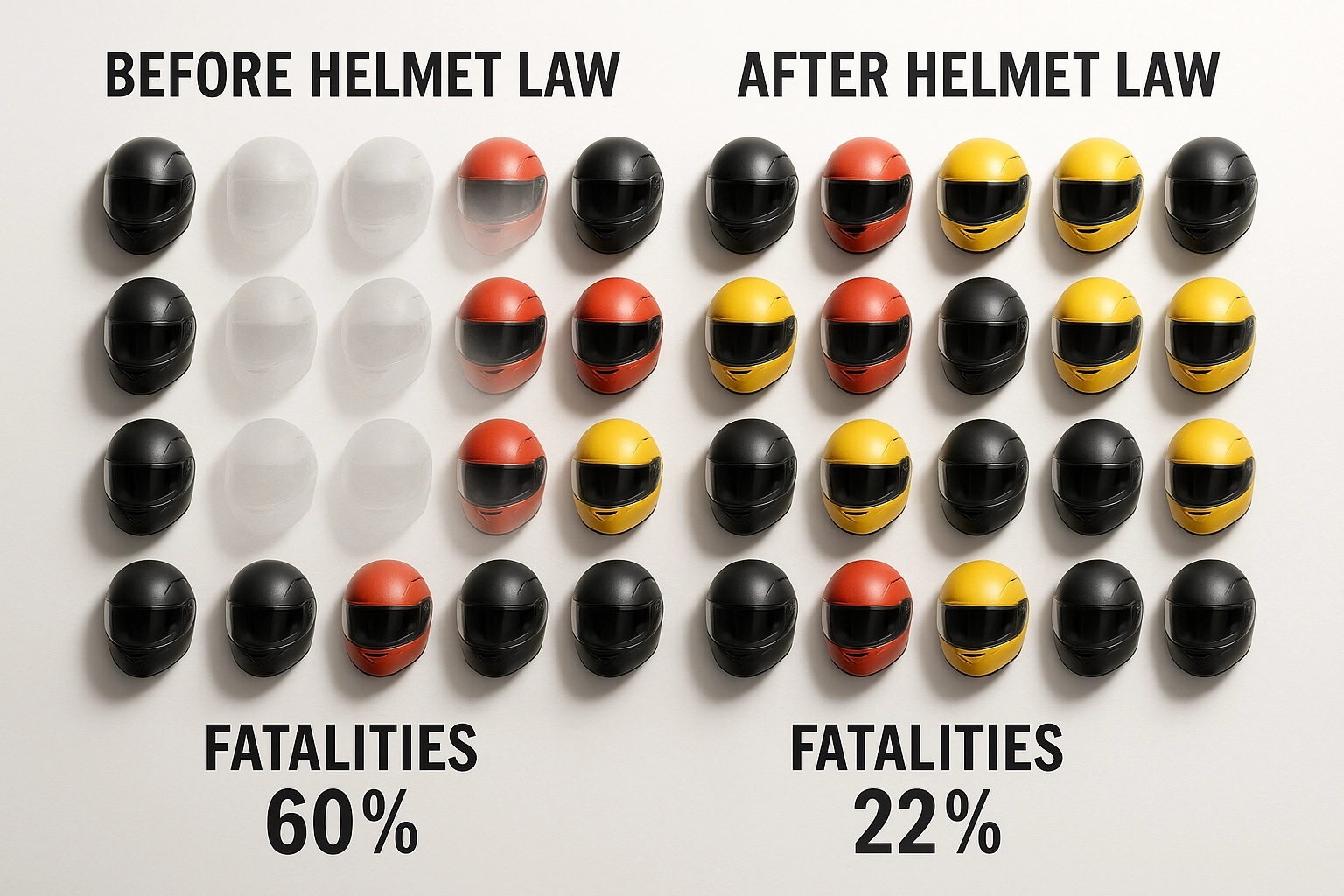
States with universal helmet laws demonstrate measurable success. The 12% non-helmet fatality rate in these jurisdictions compared to 79% in states without helmet laws isn't coincidence: it's proof that legislation saves lives.
California, New York, and Michigan have maintained comprehensive helmet laws for decades, resulting in consistently lower motorcycle fatality rates per capita compared to their non-helmet law counterparts. These states haven't seen motorcycle culture diminish; they've simply made it safer.
Data collection and research initiatives must continue expanding. The current evidence base, while compelling, requires ongoing surveillance to track the effectiveness of policy interventions and identify emerging safety challenges. Agencies need robust data systems that can quickly identify trends and measure policy impact.
The path forward demands coordinated action. State legislatures, transportation departments, and public health agencies must work together to overcome resistance and implement life-saving helmet requirements. This isn't about restricting freedom: it's about preserving life and reducing the devastating impact of preventable motorcycle fatalities.
The Bottom Line
The evidence is unambiguous and the moral imperative clear. Comprehensive helmet laws save lives, reduce economic burden, and represent sound public policy. With the technology available today and decades of research supporting helmet effectiveness, there's no justification for maintaining the status quo in states without universal helmet requirements.
If you have any doubt about the importance of this issue, consider this: every statistic represents someone's loved one. Every percentage point improvement in helmet use translates to families that remain whole, communities that retain productive members, and healthcare systems that can focus resources on truly unavoidable medical needs.
The question isn't whether agencies can afford to implement comprehensive helmet laws: it's whether they can afford not to. Motorcycle travel and safety continue evolving, but the fundamental truth remains constant: helmets save lives, and laws save even more.
Ready to make a difference in motorcycle safety? Contact Ride Fear Free, LLC at www.RideFearFree.net or call our AI Receptionist at +1 (970) 693-4854. Connect with Dan Kost, CEO, on LinkedIn to discuss how we can help your agency develop effective motorcycle safety campaigns that save lives.
Share this crucial information: Help spread awareness about the life-saving potential of helmet laws by sharing this post on LinkedIn, Facebook, X, and Instagram.
Tags: #Motivation #Branding #Strategy #Marketing #AdvertisingAndMarketing #digitalmarketing #Innovation #Sports #MotorcycleSafety #HelmetLaws #PublicHealth #TrafficSafety #PolicyAdvocacy #RoadSafety
