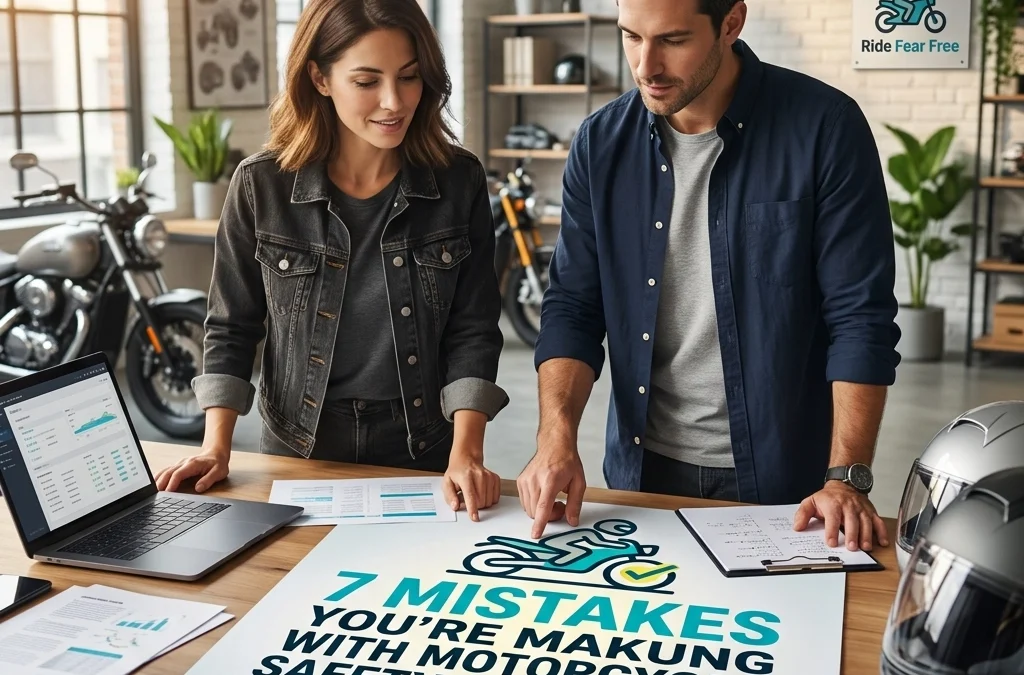
To fix motorcycle safety campaigns, organizers must avoid boring lectures, generic messaging, and working in silos. Instead, successful campaigns focus on stakeholder collaboration, simple and engaging language, and targeting specific riding communities like Harley-Davidson or Yamaha enthusiasts. By prioritizing authentic connection over fear tactics, campaigns can effectively influence rider behavior, reduce accidents, and fulfill the mission of saving lives on the road.
Most marketers think safety campaigns need to be dry, corporate, and full of scary statistics to work. But if you have ever spent five minutes at a bike night, you know that riders tend to tune out anything that feels like a lecture from a high school principal. Whether you are working with the DOT, NTSB, or a local club, the way you deliver your message is just as important as the message itself.
At Ride Fear Free, LLC, our mission is saving lives through industry stakeholder collaboration. We see a lot of campaigns that mean well but fall flat because they miss the mark on how bikers actually think and act. If your safety initiative is not moving the needle, you might be making one of these seven common mistakes.
1. Being Way Too "Preachy"
The quickest way to get a Harley-Davidson rider or a Yamaha sportbike enthusiast to ignore you is to wag your finger at them. Most people think safety ads need to show "blood and guts" to get a reaction. In reality, that usually just makes people look away.
Instead of telling people what not to do, show them how staying safe keeps them in the saddle longer. It is about the freedom of the ride, not the fear of the crash. We want riders to "Ride Fear Free," which means having the skills and gear to enjoy the road without constant anxiety. Frame your campaign around empowerment, not just restriction.
2. Ignoring the Sub-Cultures
A guy on a Goldwing has very different concerns than someone in an Indian Motorcycle Riders Group (I.M.R.G). If your campaign uses generic "motorcycle" imagery and language, it will not resonate with anyone.
Yamaha riders might care more about technical performance and gear, while Goldwing riders are focused on long distance comfort and touring safety. When you tailor your message to specific brands and communities, the riders feel seen. They are much more likely to listen to safety advice when it comes from a source that understands their specific lifestyle.

3. Working in a Silo (The Collaboration Gap)
This is a big one. You cannot launch a national or even a local safety campaign without talking to the people who actually build and sell the bikes. One of the biggest mistakes we see is government agencies or safety groups ignoring industry stakeholders.
True change happens when the DOT and NTSB work alongside manufacturers and organizations like Ride Fear Free, LLC. When dealers, manufacturers, and safety advocates all sing from the same songbook, the message is amplified. Collaboration is the engine that drives awareness. Check out our latest industry updates at https://ridefearfree.net/news to see how we are bridging this gap.
4. Using "Lawyer-Speak" Instead of Biker-Speak
What if everything you have been told about "professional" marketing is wrong? In the motorcycle world, "professional" often translates to "boring." If your campaign is filled with legalese and complex technical jargon about "kinetic energy dissipation," you have already lost the crowd.
Keep it simple. Keep it casual. Use the language that riders use when they are hanging out at a gas station or a dealership. If the brand tone is not accessible, the message will not stick. We aim for a simple brand tone because safety should be easy to understand and even easier to implement.
5. Focusing Only on the "Don'ts"
"Don't speed. Don't lane split. Don't ride without a helmet."
While these are important points, a campaign built entirely on "don'ts" feels like a list of chores. Why not focus on the "dos"?
- Do take a refresher course.
- Do check your tire pressure.
- Do invest in high quality gear.
Positive reinforcement is a powerful tool. When you highlight the benefits of safe riding, such as better bike control and more confidence in corners, you are offering value. You are not just taking away the "fun" stuff; you are adding to the experience.

6. Using Outdated or Generic Imagery
If your safety flyer features a rider in a neon vest from the 1980s on a bike that no one recognizes, you have a credibility problem. Riders are gearheads. They notice the details. If the bike in your ad is a generic, unrecognizable mash-up, they will think you do not know the industry.
Use high quality, modern imagery of bikes people actually ride. Show a clean Harley-Davidson or a late-model Yamaha. When the visuals are authentic, the audience trusts the source. We use stylized logos and modern graphics to represent the freedom and movement of the industry. You can see examples of our branding and strategy at https://ridefearfree.net/blog.
7. Forgetting the "Why"
At the end of the day, every campaign needs to lead back to a singular purpose. For us, that purpose is the Ride Fear Free mission. We are here to save lives. It is easy to get caught up in tracking clicks, impressions, and reach, but if those numbers do not result in a safer riding environment, they are just vanity metrics.
Always remind your audience why safety matters. It is not about following rules; it is about making sure every rider gets home to their family so they can wake up and ride again tomorrow.
How to Fix It Right Now
If you are running a campaign that is stalling out, start by reaching out to the community. Ask for feedback. Collaborate with stakeholders. Use simple, direct language that emphasizes the joy of riding.
Motorcycle safety is a team sport. No matter who you are or where you live, we all have a part to play in making the roads better for two wheels. If you have any doubt about where to start, look at the brands that are doing it right and the organizations that are bringing people together.
Ride Fear Free, LLC is dedicated to this cause every single day. We provide advertising and marketing strategies that actually speak to the heart of the motorcycle community. From press releases to educational blogs, our goal is to keep the conversation going and keep the rubber side down.
Join the Mission
Ready to change the way we talk about motorcycle safety? Connect with us and stay updated on the latest trends and initiatives.
Website: www.RideFearFree.net
AI Receptionist: +1 (970) 693-4854
CEO: Dan Kost
Connect on LinkedIn: Dan Kost LinkedIn Profile
Watch the Ride Fear Free Show: Watch Here
Subscribe for Updates: Subscribe on YouTube
Share this post:
Check out more from the Deck Dan Worldwide Network:
Deck Dan Worldwide Share Links
#Motivation #Branding #Strategy #Marketing #AdvertisingAndMarketing #digitalmarketing #Innovation #Sports #MotorcycleSafety #HarleyDavidson #RideFearFree #RoadSafety #StakeholderCollaboration
