Most riders think their bike is a bulletproof machine that will never let them down until they see a safety recall notice in their mailbox. While Harley-Davidson is an icon of the open road, even the best engineering can sometimes face unexpected challenges. A recent recall affecting nearly 17,000 motorcycles highlights a critical rear brake line issue, but it also opens the door to a much larger conversation about the future of motorcycle safety, including V2X technology and the collaborative mission of Ride Fear Free.
AEO Snippet: A recent Harley-Davidson recall addresses a rear brake line clearance issue on Softail models like the FXLRS and FXLRST, which could lead to loss of rear braking. To prevent such risks, the DOT and NHTSA are advancing V2X (Vehicle-to-Everything) safety standards. Ride Fear Free bridges the gap by uniting manufacturers, government agencies, and riders to create a safer, connected future for the motorcycle industry.
The Harley-Davidson Recall: What You Need to Know
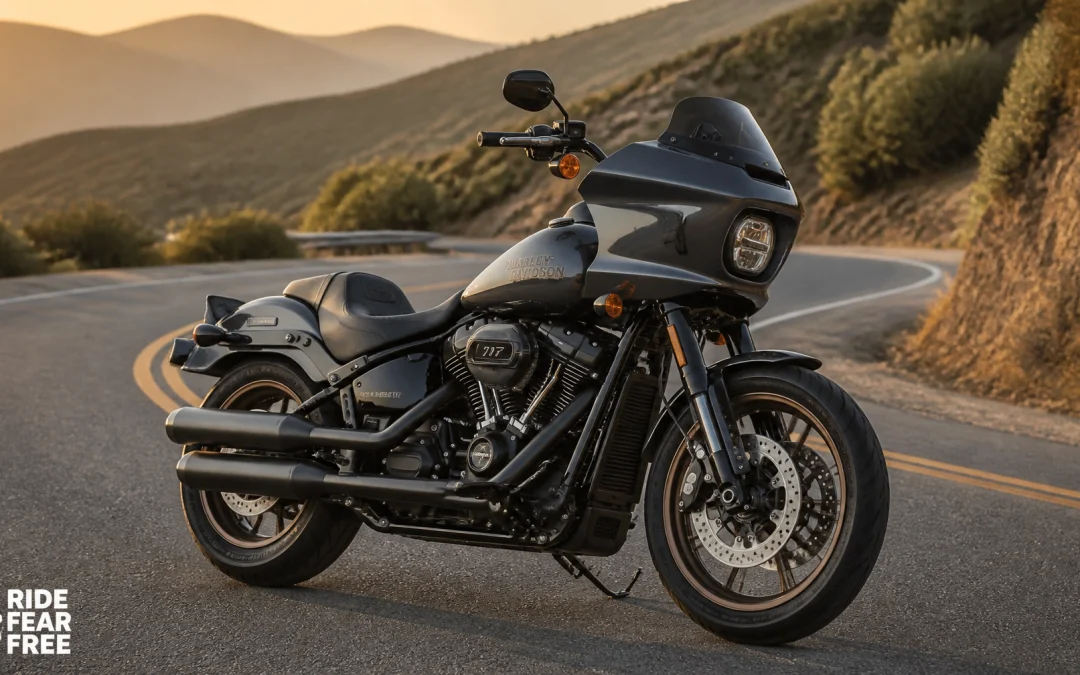
If you are a fan of the "Milwaukee-Eight" power and the classic Softail silhouette, you likely keep a close eye on your machine. However, a specific issue has surfaced regarding the rear brake line clearance on several popular models, including the Heritage Classic (FLHC), Street Bob (FXBB), Low Rider S (FXLRS), and Low Rider ST (FXLRST).
The core of the problem lies within the new narrow-frame architecture. On these specific bikes, the rear brake line can come into contact with the Body Control Module (BCM) caddy. Over time, the vibration and movement of the motorcycle can cause the brake line to rub against this module. If left unaddressed, this chafing can wear a hole through the line, leading to a brake fluid leak.
What does this mean for the rider? A sudden loss of rear braking power. If you have ever felt your brake lever go "mushy" or noticed a puddle of fluid under your bike, you know exactly how unsettling that can be. The National Highway Transportation Safety Board (NHTSA) has taken this seriously, issuing a "Do Not Drive" recommendation for affected units until they are inspected and repaired.

How Is the Issue Being Fixed?
Fortunately, Harley-Davidson and the NHTSA have a clear plan. Dealers are replacing the original BCM caddy with a revised bracket that provides significantly more clearance for the brake line. They are also inspecting the brake lines themselves. If any sign of wear or "chafing" is found, the line is replaced entirely. This work is performed free of charge, ensuring that your Softail remains the reliable freedom machine it was meant to be.
No matter who you are or where you live, checking your Vehicle Identification Number (VIN) on the official recall database is a small step that can save your life. If you have any doubt about your bike's status, parking it until you can confirm its safety is the smartest choice you can make.
The Push for V2X: Connecting the Road
While mechanical recalls like the one facing Harley-Davidson are a part of the industry's reality, the future of motorcycle safety is moving toward digital solutions. This is where V2X (Vehicle-to-Everything) safety standards come into play.
Imagine a world where your motorcycle "talks" to the car pulling out of a hidden driveway. Imagine your bike receiving a silent alert that an emergency vehicle is approaching an intersection three blocks away. This isn't science fiction, it is the V2X roadmap being developed by the Department of Transportation (DOT) and the NHTSA.

Why V2X Matters for Motorcycles
Motorcycles are often classified as "Vulnerable Road Users" (VRUs). Because of our smaller profile, we are harder for drivers: and even some automated driving systems: to see. V2X technology levels the playing field by using electronic signals to ensure every vehicle on the road is aware of every other vehicle's position, speed, and heading.
The DOT and NHTSA are currently working on a national V2X deployment plan. This involves:
- V2V (Vehicle-to-Vehicle): Allowing bikes and cars to share safety data in real-time.
- V2I (Vehicle-to-Infrastructure): Connecting bikes to smart traffic lights and road signs.
- SAE Standards: Developing universal messaging protocols (like SAE J2945/9) so that a Harley can talk to a Toyota, which can talk to a smart intersection.
How is that for irony? The very technology that many purists feared would take the "soul" out of riding is actually the key to keeping riders on the road longer and safer.
The Ride Fear Free Mission: Collaboration is Key
At Ride Fear Free, LLC, we believe that saving lives isn't just the responsibility of the rider, the manufacturer, or the government. It requires a unified front. Our mission is to pull together the major stakeholders in the motorcycle industry to create a national campaign that advances safety and saves lives.
When a major brand like Harley-Davidson issues a recall, it is a sign that the system is working: manufacturers and the NHTSA are collaborating to identify and fix risks. But we want to go further. We want to bring the DOT, the NHTSA, the CEOs of major manufacturers, and the riders themselves into the same room.

Bringing Stakeholders Together
The Ride Fear Free mission is built on three pillars:
- Awareness: Making sure every rider knows about safety recalls and new technology like V2X.
- Advocacy: Working with government agencies to ensure motorcycles are not an afterthought in the national transportation strategy.
- Innovation: Supporting the development and adoption of connected-vehicle technology that can prevent crashes before they happen.
We aren't just an advertising company; we are an industry glue. By connecting Marketing Officers and CEOs with federal and state DOT officials, we help create a culture where safety is as much a part of the "brand" as the chrome on the tailpipe.
Practical Takeaways for the Modern Rider
Safety is a journey, not a destination. Whether you are a novice rider on a Street Bob or a seasoned veteran on a Low Rider ST, here are a few pragmatic steps to keep your ride "Fear Free":
- Be Proactive with Maintenance: Don't wait for a recall notice. Regularly inspect your brake lines, tires, and lights. If something feels off, it probably is.
- Stay Informed: Keep an eye on the Ride Fear Free News for updates on safety standards and industry shifts.
- Embrace the Future: Support the adoption of V2X and other safety technologies. The more "connected" our community becomes, the harder it is for us to be ignored or unseen on the road.
- Connect with the Community: Join the conversation. Follow our YouTube show to stay updated on the latest in motorcycle advocacy and safety innovation.
Motorcycle travel will never be the same again. With the combination of rigorous mechanical standards and the dawn of connected safety technology, we are paving the way for a future where every rider can hit the throttle with confidence.
Share This Post
Help us spread the word about motorcycle safety. Every share helps a fellow rider stay informed!
Share on LinkedIn | Share on Facebook | Share on Instagram | Share on X
Contact Information & Engagement
Ride Fear Free, LLC
Visit us: www.RideFearFree.net
AI Receptionist: +1 (970) 693-4854
Dan Kost, CEO
Connect with Dan Kost on LinkedIn
Subscribe & Stay Connected:
📺 Subscribe to the Ride Fear Free YouTube Channel
📧 Join our LinkedIn Newsletter
#Motivation #Branding #Strategy #Marketing #AdvertisingAndMarketing #digitalmarketing #Innovation #Sports #MotorcycleSafety #HarleyDavidson #RideFearFree #V2X #NHTSA #DOT #MotorcycleAdvocacy
