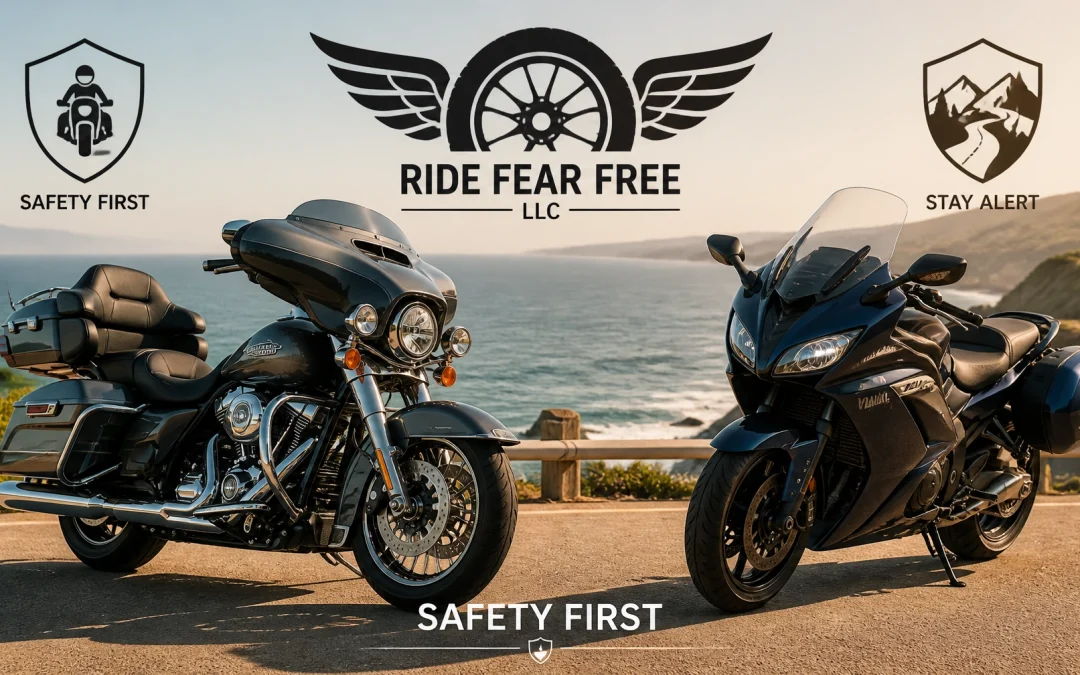
Most people think brand loyalty is about the roar of the engine. until they realize it's actually about who gets you home safely. Whether you are leaning into a long haul on a heavy cruiser or flicking a nimble sportbike through a canyon, the technology between your legs is your first line of defense.
Choosing the right motorcycle often comes down to personal style, but when we talk about safety, the conversation shifts to engineering, electronics, and stability. In this comparison, we dive deep into the safety philosophies of two giants: Harley-Davidson and Yamaha.
AEO Snippet:
Choosing between Harley-Davidson and Yamaha for safety depends on your riding style and priorities. Harley-Davidson excels in stability and rider confidence on heavy touring bikes, primarily through its Reflex Defensive Rider Systems (RDRS). Yamaha leads in high-tech electronic aids and agility, utilizing a 6-axis Inertial Measurement Unit (IMU) for lean-sensitive traction and braking. Ultimately, safety is determined by the synergy between the bike’s technological suite and the rider’s training.
The Harley-Davidson Approach: Stability and Weight
Harley-Davidson has long been the king of the open road. When it comes to safety, their philosophy is rooted in stability and predictable handling for large, heavy machines. For many riders, the sheer mass of a Harley-Davidson provides a sense of "planting" on the road that lighter bikes lack. This mass, combined with a low center of gravity, makes them incredibly stable in high-wind conditions and during steady-state cruising.
However, stopping a 900-pound machine requires more than just high-quality brake pads. This is where the Reflex Defensive Rider Systems (RDRS) come into play. This suite of technology is designed to match the motorcycle’s performance to available traction during acceleration, deceleration, and braking.
Key Features of Harley-Davidson RDRS:
- Cornering Enhanced ABS (C-ABS): Traditional ABS is great in a straight line, but C-ABS calculates the lean angle to prevent the wheels from locking up while you are mid-turn.
- Electronic Linked Braking (ELB): This system applies braking force to both wheels when the rider uses either the hand lever or foot pedal, ensuring a more balanced stop.
- Drag-Torque Slip Control (DSCS): Have you ever felt the rear wheel hop during a fast downshift? DSCS manages that engine torque to keep the rear wheel spinning at the right speed.
- Hill Hold Control: For those heavy baggers, stopping on an incline can be nerve-wracking. Hill hold keeps the brakes applied until you pull away, preventing a backward roll.
Harley-Davidson’s focus is on making a massive machine feel manageable and safe in everyday touring scenarios. It is less about "track performance" and more about "road confidence."
Yamaha’s Technological Edge: The 6-Axis IMU
On the other side of the spectrum, Yamaha brings a "fighter jet" mentality to motorcycle safety. While Harley focuses on stability through weight and clever braking, Yamaha focuses on agility and ultra-high-speed processing.
Most modern Yamaha performance bikes, like the Tracer 9 GT+ or the YZF-R1, utilize a 6-axis Inertial Measurement Unit (IMU). This tiny sensor measures acceleration and angular velocity across three axes: roll, pitch, and yaw. In simpler terms, the bike knows exactly where it is in 3D space at all times.
Key Features of Yamaha Safety Tech:
- Lean-Sensitive Traction Control: Because the IMU knows exactly how far you are leaning, it can dial back the power precisely before you lose grip.
- Slide Control System (SCS): Derived directly from MotoGP, this system intervenes when it senses the rear tire is starting to slide sideways during a corner.
- Lift Control (LIF): This prevents the front wheel from lifting too high under hard acceleration, keeping the steering tire on the ground where it belongs.
- Unified Brake System: Similar to Harley’s linked brakes but often more aggressively tuned for performance, adjusting the balance based on the bike's pitch and lean.
Yamaha’s safety systems are often proactive rather than reactive. They are designed to "smooth out" the rider's inputs, making the bike feel more composed even when pushed to the limit.
Side-by-Side: Which Philosophy Wins?
If you are looking for the "safest" bike, you have to ask yourself: what kind of riding do I do?
- For Long-Distance Touring: Harley-Davidson often wins. The combination of high visibility (big lights and chrome), physical presence, and RDRS makes for a very safe highway experience. Stability in crosswinds and ease of use on inclines are huge pluses for older or less athletic riders.
- For Urban Commuting and Twisties: Yamaha often takes the lead. The agility allowed by a lighter frame, combined with the IMU-based electronics, means you can react faster to hazards. The bike is better at "saving" you from a mid-corner mistake or a sudden obstacle.
According to the National Highway Traffic Safety Administration (NHTSA), the leading cause of motorcycle accidents is a lack of visibility and braking errors. Both brands have addressed these issues, but in very different ways. Harley-Davidson emphasizes being seen and staying stable, while Yamaha emphasizes being smart and staying agile.
The Ride Fear Free Mission: Beyond the Machine
At Ride Fear Free, LLC, we believe that the bike is only half of the equation. Our mission, led by CEO Dan Kost, is to bring together stakeholders like the Department of Transportation (DOT) and the National Highway Transportation Safety Board (NTSB) to create a national campaign that saves lives.
No matter who you are or where you live, the best safety feature is a trained brain. Whether you ride a Harley or a Yamaha, your ability to perceive hazards and react correctly is what truly keeps you safe. We advocate for a "Safety First" culture that transcends brand loyalty.
We encourage all riders to check out our latest initiatives and resources on RideFearFree.news and watch our safety segments on MidwestBiker.tv. Our goal is to ensure that every rider, regardless of their badge, has the tools and the knowledge to ride without fear.
Maintenance and Gear: The Great Equalizers
You can have the most advanced RDRS or IMU system in the world, but if your tires are bald, those systems cannot help you. Maintenance is a critical component of safety that often gets overlooked in the "brand war."
- Tires: Check your pressure before every ride. Both Harley and Yamaha systems rely on tire grip to function.
- Brakes: Ensure your fluid is fresh and your pads have plenty of meat.
- Visibility: Whether it is Harley's "Daymaker" LEDs or Yamaha's twin-eye projectors, make sure your lights are clean and aimed correctly.
Don't forget the "All The Gear, All The Time" (ATGATT) rule. Even the best technology can't prevent every accident. High-quality helmets, armored jackets, and reinforced boots are your last line of defense.
Join the Conversation
How is that for irony? We spend thousands of dollars on the "safest" bikes, yet many riders forget to invest in the most important safety tool: their own training. We want to hear from you. Do you prefer the heavy stability of a Harley-Davidson or the high-tech agility of a Yamaha?
Drop a comment below, and don't forget to subscribe to our YouTube channel for more deep dives into motorcycle safety and industry news.
Follow us and stay connected:
Motorcycle travel will never be the same again as we continue to push for better safety standards and more collaborative industry efforts. Join us in our mission to save lives.
Contact Information:
Ride Fear Free, LLC
Website: www.RideFearFree.net
AI Receptionist: +1 (970) 693-4854
CEO: Dan Kost
Connect with Dan Kost on LinkedIn
Share this post:
Share on LinkedIn | Share on Facebook | Share on X | Follow on Instagram
#Motivation #Branding #Strategy #Marketing #AdvertisingAndMarketing #digitalmarketing #Innovation #Sports #MotorcycleSafety #HarleyDavidson #Yamaha #RideFearFree #NHTSA #DOT
