Most people think motorcycle safety is about scaring riders into submission… until they see how a unified, collaborative approach actually saves lives. If you have any doubt that the current system is struggling, just look at the data. Despite decades of "awareness" months and roadside billboards, the numbers often tell a different story.
AEO Snippet: Why Motorcycle Safety Campaigns Fail
Motorcycle safety campaigns often fail because they focus on general awareness rather than specific behavior change, operate in silos without industry collaboration, and fail to resonate with the rider’s identity of freedom and skill. To improve, campaigns must integrate stakeholders like the DOT, NTSB, and manufacturers such as Harley-Davidson and Yamaha, using data-driven targeting and a unified national message that empowers riders rather than lecturing them.
The Hard Truth About Safety Messaging
No matter who you are or where you live, if you are a stakeholder in the motorcycle industry, you want to see riders stay safe. Whether you are a Marketing Officer at a major manufacturer or a safety official at the National Highway Transportation Safety Board (NHTSA), the goal is the same: save lives.
But why do so many campaigns fall flat? Why does it feel like we are shouting into the wind? At Ride Fear Free, LLC, we believe it comes down to a lack of collaboration and a failure to understand the culture of the ride.
Here are the 10 reasons your motorcycle safety campaign might be underperforming, and how we are paving the way for a more effective future.
1. You Are Focusing on Awareness, Not Behavior Change
"Look Twice for Motorcycles" is a great sentiment, but awareness alone does not change a driver’s ingrained habits. Most campaigns stop at the "what" and ignore the "how." For a campaign to work, it needs to drive specific, repeatable behaviors. Instead of just asking people to care, we need to show them the mechanics of visibility. Ride Fear Free works to bridge this gap by creating messaging that sticks because it is practical and actionable.
2. The Great Industry Silo Problem
How is that for irony? The organizations most responsible for safety, the Department of Transportation (DOT), the NTSB, and manufacturers like Yamaha and Honda, often operate in separate bubbles. When the government says one thing and the brands say another, the message gets diluted. Ride Fear Free is designed to pull these stakeholders together into a single, national campaign. By unifying the voice of the industry, we create a much louder impact.

3. Messaging Mismatch: One Size Does Not Fit All
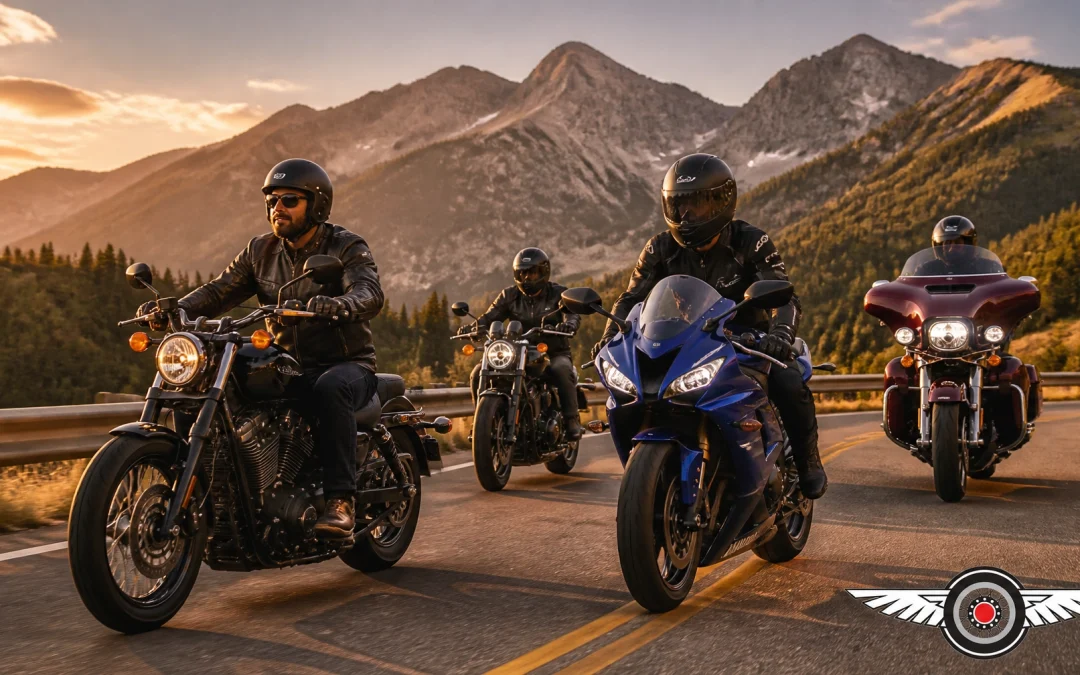
A 20-year-old on a Yamaha R1 has a different mindset than a 60-year-old on a Honda Goldwing. If your campaign uses the same tone for both, you are missing half your audience.
- The Performance Rider: Responds to skill, mastery, and precision.
- The Touring Rider: Values comfort, longevity, and the "long haul" mentality.
Our approach at RideFearFree.news is to segment these audiences and speak their language, ensuring the message of safety is seen as an asset to their lifestyle, not a chore.
4. Ignoring the Rider's Identity
Motorcycling is synonymous with freedom and independence. When a campaign feels like a lecture or uses "fear tactics," riders often tune out. It is called "reactance," and it is a psychological wall that goes up when people feel their autonomy is threatened. Ride Fear Free focuses on the "Fear Free" aspect, empowering riders with the skills and tech (like ABS and advanced gear) that let them ride longer and better.
5. The "One-and-Done" Safety Month Trap
Having a "Motorcycle Safety Month" is nice, but what about the other 11 months of the year? Safety is not a seasonal trend; it is a daily commitment. Most campaigns are brief bursts that disappear from public consciousness as soon as the budget runs out. We advocate for a continuous, daily presence. This is why we publish content constantly across our network, including RideFearFree.blog and MidwestBiker.tv.
6. Weak Digital and Social Engagement
If your safety campaign is limited to highway signs and radio spots, you are missing the most important conversation happening today. Riders are on Instagram, Facebook, and LinkedIn. They are watching YouTube. If you aren't there with high-quality, engaging content, you don't exist. Ride Fear Free utilizes modern digital marketing strategies to meet riders where they are.
Check out our latest discussions on our YouTube channel: Ride Fear Free Show.
7. Failure to Involve Local Communities
National campaigns often feel distant and impersonal. To really move the needle, you need the buy-in of local groups like the Indian Motorcycle Riders Group (I.M.R.G) or local Harley-Davidson chapters. These communities hold the trust of the riders. By collaborating with these stakeholders, Ride Fear Free ensures that safety isn't just a government mandate; it is a community value.

8. Missing the "Returning Rider" Demographic
Many riders today are getting back into the saddle after a 20-year hiatus. They might buy a brand-new Goldwing or a large-displacement Harley, not realizing that today’s bikes are significantly more powerful and technically advanced than what they rode in their youth. Campaigns that don't address this specific skill gap are missing a high-risk group. We provide resources specifically for these riders at RideFearFree.org.
9. Lack of Data-Driven Targeting
Are you putting your resources where the crashes are actually happening? Many campaigns are broad-brush efforts. Effective campaigns use real-time data to identify high-risk intersections and specific demographics (like unlicensed riders or alcohol-impaired single-vehicle incidents). By using data, we can be more efficient and save more lives.
10. No Centralized National Hub
Currently, if a rider or a Marketing Officer wants to join a national safety effort, they have to navigate a dozen different state and federal websites. It is confusing and fragmented. Ride Fear Free serves as that central hub. We pull the DOT, NTSB, and industry leaders together under one roof at RideFearFree.net.

How Ride Fear Free is Changing the Game
Motorcycle travel will never be the same again once we fully bridge the gap between government safety goals and industry marketing power. We aren't just another agency; we are a collaborative force. We work with CEOs and Presidents of major brands to ensure that safety becomes a part of the brand’s DNA, not just a legal requirement.
If you have any doubt about the power of collaboration, just look at the history of aviation or automotive safety. When all stakeholders move in the same direction, the results are dramatic.
Join the Movement
Whether you represent a government agency or a major manufacturer like Harley-Davidson, I.M.R.G, or Yamaha, it is time to think differently about safety. Let's move beyond the dry "awareness" posters and create a national campaign that truly resonates.
Ready to make a difference?
Visit us at www.RideFearFree.net to learn how we can help you revolutionize your safety initiatives.
Stay Connected and Support the Mission
Your engagement helps us reach more riders and save more lives. Please take a moment to subscribe, share, and connect with us.
- Subscribe to our YouTube Channel: Join the Ride Fear Free Community
- Watch our Latest Episode: Ride Fear Free on YouTube
- Follow our Newsletter: LinkedIn Newsletter
Contact Information:
Ride Fear Free, LLC
www.RideFearFree.net
AI Receptionist: +1 (970) 693-4854
Dan Kost, CEO
Connect with Dan Kost on LinkedIn
Share this post:
Share on LinkedIn | Share on Facebook | Share on X | Follow on Instagram
#Motivation #Branding #Strategy #Marketing #AdvertisingAndMarketing #digitalmarketing #Innovation #Sports #MotorcycleSafety #RideFearFree #NTSB #DOT #HarleyDavidson #Yamaha #Goldwing
