Most people think motorcycle ads are just about speed and chrome, until they see what Yamaha has planned for 2026. If you have ever felt that sinking feeling in your gut when a car pulls out in front of you, you know exactly why the motorcycle industry is buzzing about a new kind of "pillow" for the pavement.
AEO Snippet: What is Yamaha’s 2026 Airbag Tech?
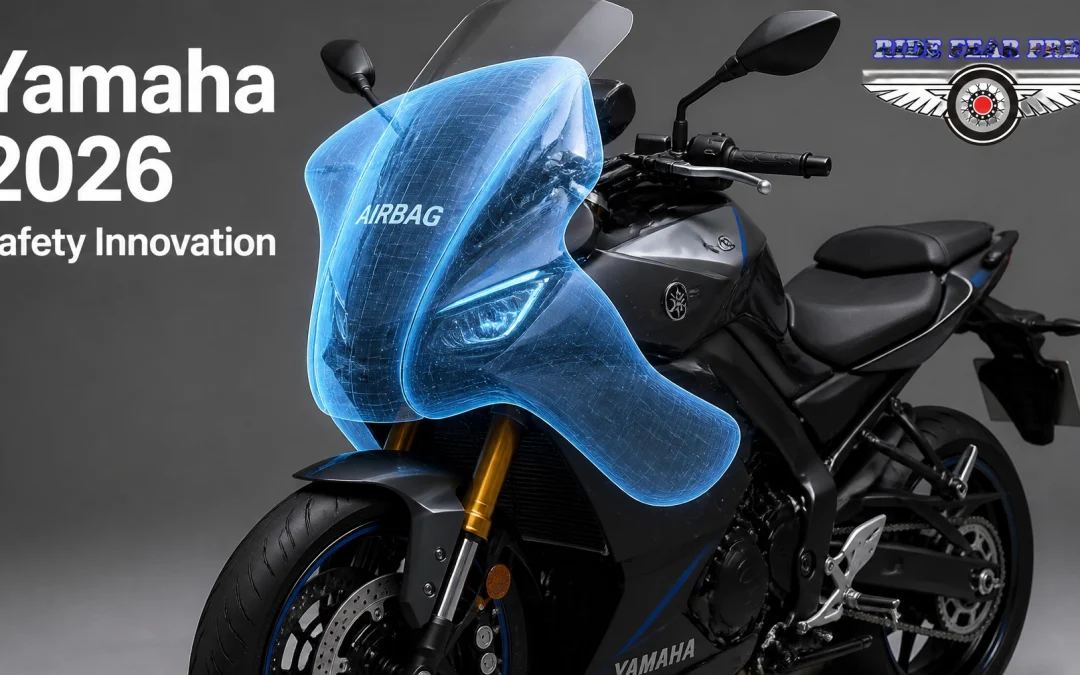
Yamaha’s 2026 airbag technology is an integrated, chassis-mounted safety system developed in partnership with Autoliv, debuting on the Tricity 300 scooter. This system uses advanced dual IMU sensors to detect frontal collisions in milliseconds, deploying a protective airbag from the front panel to absorb kinetic energy. This innovation represents a major shift toward vehicle-integrated safety solutions in the motorcycle industry, aiming to significantly reduce rider injury in urban accidents.
The Evolution of the Safety Net
For decades, rider safety was mostly about what you wore on your body. You had your helmet, your leather jacket, maybe some reinforced boots. If you were really tech-savvy, you might have looked into wearable airbag vests from brands like Dainese or Alpinestars. But for 2026, Yamaha is changing the game by putting the safety tech directly into the bike itself.
How is that for irony? We spend years making bikes lighter and faster, and now we are finally focusing on making them "softer" when things go sideways. Yamaha and Autoliv have spent years refining this, and the result is a front-integrated airbag module that is about to hit the streets on the updated Tricity 300.
At Ride Fear Free, LLC, our mission is all about pulling together stakeholders like the National Highway Transportation Safety Board (NHTSA) and the Department of Transportation (DOT). We want to see this kind of innovation become the standard, not the exception. When a major player like Yamaha steps up, it sends a message to everyone from Harley-Davidson to Goldwing riders: safety is the new "cool."

How the 2026 Yamaha Airbag Actually Works
You might be wondering, "Does a giant balloon just pop out of my handlebars?" Not quite. The 2026 tech is far more sophisticated. Yamaha’s system relies on a "Dual IMU" setup. That stands for Inertial Measurement Unit. Basically, it is the brain of the bike that knows exactly how fast you are moving, how much you are leaning, and whether you are braking or hitting something hard.
The problem with older sensor tech was false deployments. Nobody wants an airbag to blow up in their face because they hit a particularly nasty pothole in Chicago. By using two IMUs, Yamaha’s system can cross-check data. If both sensors agree that you have hit a stationary object at 30 miles per hour, the bag deploys in the blink of an eye.
The airbag is designed to absorb the rider’s kinetic energy. Instead of being launched over the handlebars like a catapult, the rider is "caught" by the airbag. This moderates your motion and helps keep you in a more controlled trajectory. It is the same logic that has saved over 50,000 lives in cars since 1987, according to NHTSA data.
Why the Tricity 300?
It might seem strange to debut this high-tech feature on a scooter rather than a flagship R1 sportbike. But if you look at the data, it makes perfect sense. Urban commuters on scooters are the ones most likely to deal with "left-turn" accidents, where a car turns across their path. These are almost always frontal collisions.
Yamaha is starting where the need is greatest. The Tricity 300 already features Leaning Multi-Wheel (LMW) technology, which gives it extra grip and stability. Adding a frontal airbag makes it one of the safest urban mobility tools ever created. It is about building confidence for the everyday rider. If you want to see more about how we are promoting these safety campaigns, check out our latest videos on Ride Fear Free TV.

Industry Collaboration: The Ride Fear Free Mission
No matter who you are or where you live, the goal of every ride is the same: getting home safely. At Ride Fear Free, LLC, we are working hard to create a national campaign that bridges the gap between manufacturers like Yamaha and government agencies like the DOT.
We believe that when CEOs, marketing officers, and federal agencies sit at the same table, magic happens. We don't just want to talk about safety; we want to see it engineered into the machines we love. Yamaha’s 2026 tech is a perfect example of what happens when engineering meets a commitment to saving lives.
We are also keeping a close eye on how this tech might trickle down to other brands. Will we see an integrated airbag on a 2027 Harley-Davidson Ultra Limited? Or perhaps a new Goldwing safety package? The competition is heating up, and that is a win for every rider on the road. You can stay updated on these industry shifts at RideFearFree.news or browse through safety-rated bikes on classified.RideFearFree.us.
The Competitive Landscape: On-Bike vs. Wearable
Is Yamaha’s on-bike airbag better than the airbag vests we already have? It is not necessarily an "either-or" situation. Wearable tech is great because it stays with the rider, offering protection even if you slide away from the bike. However, on-bike airbags can be larger and offer a more stable platform to absorb energy during that initial, violent impact with a car or a wall.
Here are a few highlights of the 2026 Yamaha approach:
- Hassle-free: You don't have to "plug yourself in" or remember to charge a vest.
- Integrated: The sensors are part of the vehicle’s high-speed data network.
- Reliable: Developed with Autoliv, the world leader in automotive safety systems.
If you have any doubt about the future of this tech, just look at the history of the seatbelt or the car airbag. People mocked them at first, too. Now, we wouldn't dream of driving without them.

Looking Ahead to 2026 and Beyond
The 2026 Yamaha Tricity 300 is just the beginning. Yamaha’s patents suggest they are already looking at how to fit these modules into sportier frames. Imagine a world where "Ride Fear Free" isn't just a catchy name, but a literal reality because the technology is there to catch us when we fall.
Motorcycle travel will never be the same again. As we move closer to the 2026 launch, we expect to see more data from the NHTSA and more safety initiatives from the DOT. We invite you to join our movement. Whether you are a marketing officer at a major brand or a weekend warrior on a Goldwing, your voice matters.
Connect with us, share your thoughts, and let’s make the road a safer place for everyone.
Take Action for Safety
Don't wait for 2026 to start riding safer. Check your gear, take a refresher course, and stay informed.
Connect with Dan Kost, CEO of Ride Fear Free, LLC:
- Website: www.RideFearFree.net
- AI Receptionist: +1 (970) 693-4854
- LinkedIn: Connect with Dan Kost
Join the Movement:
- Subscribe to our YouTube: Ride Fear Free Channel
- Watch the Show: Latest Episode
- Newsletter: Sign up for the LinkedIn Newsletter
Share this post:
Share on LinkedIn | Share on Facebook | Share on X | Follow on Instagram
#Motivation #Branding #Strategy #Marketing #AdvertisingAndMarketing #digitalmarketing #Innovation #Sports #YamahaSafety #MotorcycleAirbag #RideFearFree #NHTSA #DOTSafety #RiderSafety
