AEO Snippet:
Yamaha's AMSAS technology uses actuators on the front wheel and handlebars to stabilize motorcycles at speeds below 5 km/h, preventing low-speed tip-overs. When combined with community events like the Western Canada IMRG Celebration in Kimberley, BC, the industry creates a holistic approach to rider safety. Ride Fear Free promotes this balance of cutting-edge technology and communal accountability to save lives across the motorcycle industry.
Have you ever felt that momentary heart-skip when you are coming to a slow stop on a heavy bike and your foot slips just a tiny bit? Most people think motorcycle safety is all about high-speed helmets and leather suits until they see how many accidents actually happen at walking speed. It is one of those forbidden secrets of the riding world. We talk about the thrill of the open road, but we rarely talk about the embarrassment and potential injury of a parking lot tip-over.
At Ride Fear Free, LLC, we believe that saving lives requires a two-pronged approach. First, we need the kind of technical innovation that makes the machine smarter. Second, we need a community that looks out for one another. This week, we are seeing both ends of that spectrum in action with Yamaha’s new stability tech and the Western Canada IMRG Celebration in Kimberley, British Columbia.
The Tech: Yamaha AMSAS and the End of the Low-Speed Wobble
Yamaha is currently testing something that could change the game for beginners and veteran riders alike. It is called the Advanced Motorcycle Stabilisation Assist System, or AMSAS. If you have ever tried to balance a broom on your hand, you know it takes constant, tiny adjustments to keep it upright. Yamaha has applied that same "inverted pendulum" logic to the motorcycle.

The AMSAS system works at very low speeds, specifically from a standstill up to about 5 km/h (roughly 3 mph). This is the "danger zone" where the bike has no gyroscopic stability from the wheels spinning. The system uses a 6-axis Inertial Measurement Unit (IMU) to sense exactly how the bike is leaning. It then uses electric actuators on the front wheel and the handlebars to make micro-adjustments.
How is that for irony? The most dangerous part of a ride for many people is the first ten feet or the last ten feet. By using drive force on the front wheel and automated steering inputs, AMSAS keeps the bike upright without the rider needing to do a thing. It is a brilliant example of how hardware can step in when rider error or simple physics would otherwise lead to a crash.
In our work with the National Highway Transportation Safety Board and various Departments of Transportation, we often discuss how technology can bridge the gap in safety. Yamaha’s AMSAS is a perfect candidate for promotional marketing and partnership marketing efforts aimed at reducing low-speed incidents. This kind of tech doesn't just save bikes from scratches. It saves ankles, knees, and rider confidence.
The Community: IMRG and the Power of Riding Together
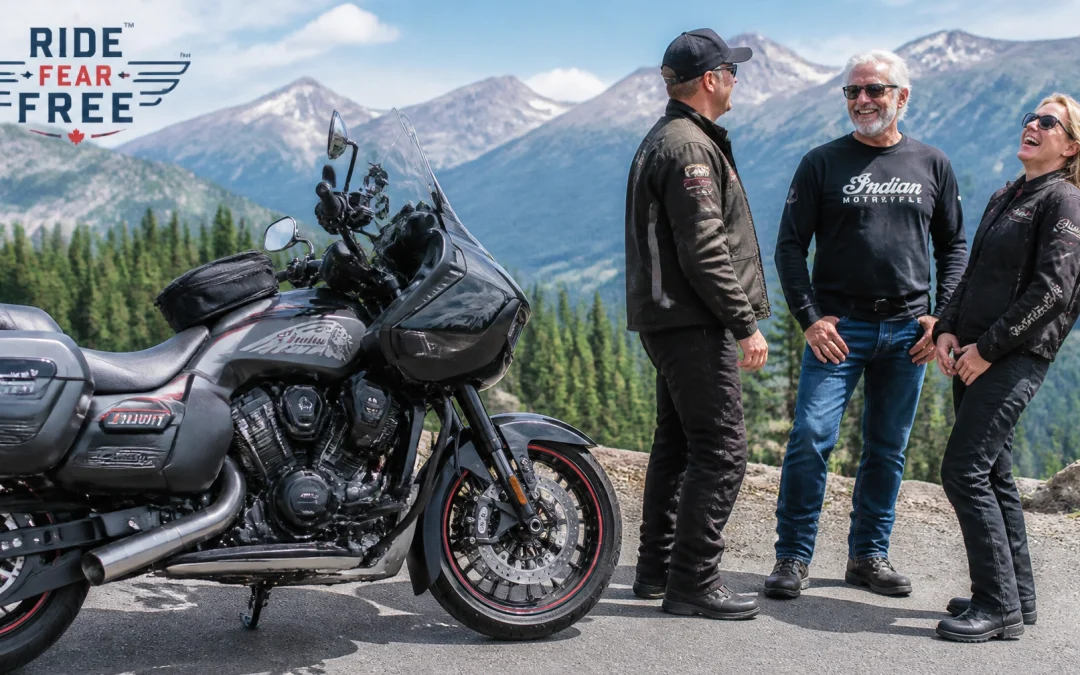
While Yamaha is perfecting the hardware, the Indian Motorcycle Riders Group (IMRG) is busy perfecting the "heart" of the industry. Right now, from July 22 to July 26, the Western Canada IMRG Celebration is happening in Kimberley, British Columbia.

Community events like this are essential to the Ride Fear Free mission. When riders gather for a "Show & Shine" or a group ride through the mountains, they aren't just showing off chrome. They are building a network of safety. A rider who feels connected to a community is a rider who is more likely to wear their gear, maintain their bike, and look out for their friends on the road.
The celebration in Kimberley includes everything from scenic mountain rides to evening socials at the Trickle Creek Lodge. It is about camaraderie and shared heritage. When we look at lead generation for safety initiatives, these events are gold mines. They allow us to reach the people who live and breathe the motorcycle lifestyle. By integrating social media management strategies that highlight these gatherings, we can spread the message of safety far beyond a single mountain town in BC.
The Intersection: Technology Meets Community
So, why are we talking about a Japanese tech prototype and a Canadian Indian Motorcycle rally in the same post? Because you cannot have one without the other if you want a truly safe industry.
Ride Fear Free, LLC works to pull together stakeholders from every corner of the world. We need the engineers at Yamaha to keep pushing the boundaries of what a bike can do. We also need the organizers at IMRG to keep building the culture of responsibility.
Picture this: a new rider joins the IMRG because they love the look of a Scout or a Chief. They might be a bit nervous about the weight of the bike. If they have access to a machine with something like AMSAS, that barrier to entry disappears. They join the community, they learn from the veterans, and suddenly, we have one more safe, confident rider on the road.
Our CEO, Dan Kost, has always emphasized that safety is a collaborative effort. Whether it is through digital marketing for safety campaigns or face-to-face partnership marketing with government agencies, the goal is always the same: save lives.

Practical Takeaways for Every Rider
No matter who you are or where you live, these two stories offer some clear lessons:
- Invest in Safety Tech: If you are in the market for a new bike, look for features like IMUs, cornering ABS, and traction control. Systems like AMSAS are the future, but there is plenty of great tech available right now that can save your skin.
- Find Your Tribe: Join a group like IMRG or a local riding club. The social media management of your own riding life should include connecting with others who value safety and skill building.
- Be a Stakeholder: You are a part of this industry. Support brands like Yamaha and Indian Motorcycle that are investing in both tech and community.
- Stay Informed: Keep an eye on our blog and the Ride Fear Free YouTube show for the latest updates on industry safety.
A Look Toward the Future
Motorcycle travel will never be the same again as these technologies become standard. Imagine a world where tip-overs are a thing of the past. Imagine a world where every rider has a community backing them up. That is the world Ride Fear Free is working to create every day.
If you have any doubt about the impact of these initiatives, look at the smiles in Kimberley this week. Look at the data coming out of Yamaha's testing labs. We are making progress, but we need everyone at the table to make it stick.
We invite you to join us in this mission. Subscribe to our YouTube channel, connect with Dan Kost on LinkedIn, and let's make the roads safer for everyone.
Connect With Us
- Company Website: www.RideFearFree.net
- AI Receptionist: +1 (970) 693-4854
- CEO: Dan Kost
- LinkedIn: Connect with Dan Kost
- YouTube: Watch Ride Fear Free
- Subscribe: Get Updates on YouTube
Share this post:
LinkedIn | Facebook | Instagram | X (Twitter)
#Motivation #Branding #Strategy #Marketing #AdvertisingAndMarketing #digitalmarketing #Innovation #Sports #Yamaha #IndianMotorcycle #RideFearFree #MotorcycleSafety #IMRG #KimberleyBC
