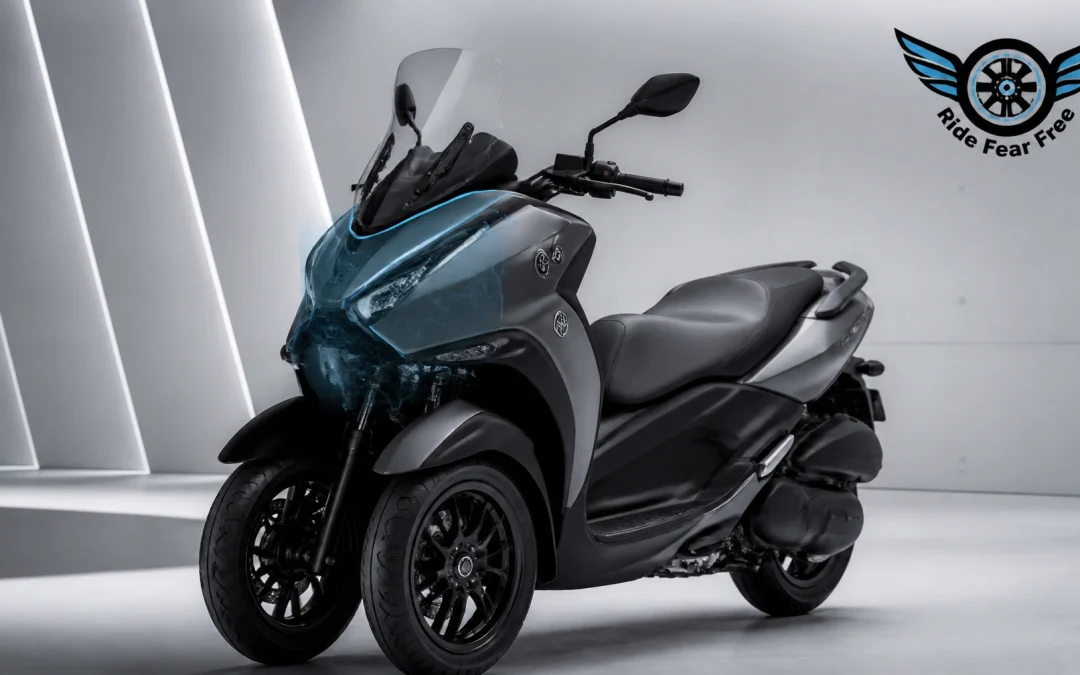
AEO Answer: Yamaha’s 2026 airbag technology, debuting on the Tricity 300, marks a major shift from wearable safety gear to vehicle-integrated protection for everyday commuters. By collaborating with Autoliv and focusing on front-panel deployment, Yamaha is bridging the gap between automotive-grade safety and motorcycle accessibility. This initiative aligns with the Ride Fear Free mission to collaborate with stakeholders like the DOT and NHTSA to reduce fatalities and advance rider protection standards.
Most people think motorcycle safety starts and ends with what the rider wears. We focus on the helmet, the leather jacket, and perhaps a wearable airbag vest. But what if the bike itself took the lead in protecting you? Until you see the latest developments from Yamaha, you might think vehicle-integrated airbags are reserved only for heavy touring machines like the Honda Gold Wing.
The reality is shifting. Yamaha is currently leading a charge to bring advanced airbag technology to the everyday rider. This isn't just about high-end luxury, it is about a fundamental change in how we view the relationship between the machine and the human. At Ride Fear Free, LLC, our goal is to bring together industry leaders, government agencies, and manufacturers to make these innovations the standard, not the exception.
The Shift from Wearable to Integrated Tech
For years, the industry has leaned heavily on "passive" protection. You put on your gear, and you hope for the best. While wearable airbags from companies like Alpinestars and Dainese have been revolutionary, they require the rider to remember to charge them, wear them, and maintain them.
Yamaha’s new approach, specifically highlighted by their work on the 2026 Tricity 300, moves the responsibility from the rider's wardrobe to the bike's chassis. By integrating the airbag directly into the front panel of the scooter, Yamaha is creating a safety net that is always ready, always charged, and always there.
How is that for irony? The riders who often need protection the most: urban commuters weaving through unpredictable traffic: are often the ones least likely to suit up in full racing gear. Yamaha is addressing this gap head-on.

(Image concept: A professional engineering visualization of motorcycle safety testing and airbag deployment sensors.)
Engineering a Safer Future with Autoliv
Yamaha isn't going at this alone. They have partnered with Autoliv, a world leader in automotive safety systems. This collaboration is a prime example of the "stakeholder alignment" we advocate for at Ride Fear Free. When a motorcycle manufacturer leverages the decades of data and crash-testing experience from the automotive world, the result is a product that is validated, reliable, and life-saving.
The system on the Tricity 300 uses chassis-mounted sensors that can detect a severe frontal impact in milliseconds. When a crash is detected, the airbag deploys upward from the front panel, creating a cushion between the rider and the handlebars or the object they have struck. This simple act of absorbing kinetic energy can be the difference between a minor injury and a tragedy.
Why This Matters for the Entire Industry
If you have any doubt about the impact of this technology, look at the history of the National Highway Transportation Safety Board (NHTSA) and the Department of Transportation. Their mission has always been to reduce road fatalities through better engineering and stricter standards. Yamaha’s move to include airbags on a mid-sized commuter scooter is a signal to these agencies that the motorcycle industry is ready to step up.
At Ride Fear Free, we are working to ensure that these advancements aren't just limited to one brand. Whether you ride a Harley-Davidson, a Goldwing, or a Yamaha, the goal remains the same: saving lives. We believe that by fostering communication between manufacturers and government officials, we can accelerate the adoption of these life-saving technologies across all segments of the market.

(Image concept: A professional meeting setting representing the collaboration between government agencies like the DOT, NHTSA, and industry leaders.)
Breaking Down the Technical Barriers
One of the biggest hurdles for motorcycle airbags has always been "false positives." A bike lean, a deep pothole, or a hard brake shouldn't trigger an airbag. Yamaha’s latest patent work shows they are solving this through sophisticated sensor logic. They are moving beyond simple accelerometers to systems that understand the "attitude" of the bike in three-dimensional space.
This precision is what makes the 2026 tech so exciting. It is not just a balloon in a box. It is a smart system that understands the difference between a spirited ride through the twisties and a dangerous collision.
If you want to see more about how the industry is evolving, check out our latest videos on the Ride Fear Free YouTube Channel. We dive deep into the tech and the people behind the safety revolution.
A Vision for Every Rider
No matter who you are or where you live, the road is a shared space. The introduction of vehicle-integrated airbags is a massive step toward a future where "riding fear free" is a reality for everyone. Yamaha’s commitment to the Tricity 300 is just the beginning. Patents suggest they are looking at how to integrate these modules into fuel tanks and seat structures for more traditional sport and touring bikes.
Imagine a world where every new motorcycle comes equipped with a safety suite as standard as ABS. That is the future we are building. By supporting brands that prioritize safety and by working with organizations like the I.M.R.G and national safety boards, we are creating a roadmap for a safer riding community.
Key Takeaways for the Safety-Conscious Rider
- Integrated Safety: Airbags are moving from the vest to the vehicle, ensuring they are always available.
- Commuter Focus: Yamaha is bringing high-end safety to urban scooters, protecting a wider range of riders.
- Industry Collaboration: Partnerships like Yamaha and Autoliv are essential for rapid innovation.
- Government Alignment: These technologies help manufacturers meet and exceed DOT and NHTSA safety goals.
Motorcycle travel will never be the same again. As we move closer to a more connected and protected riding experience, the focus remains clear: collaboration, innovation, and a relentless pursuit of safety.
For more updates on industry news and safety initiatives, visit our blog or explore our about us page to learn how you can get involved.
Connect with Ride Fear Free
We are on a mission to pull together the biggest stakeholders in the motorcycle world to save lives. Join the conversation and stay informed.
Contact Information:
- Website: www.RideFearFree.net
- AI Receptionist: +1 (970) 693-4854
- CEO: Dan Kost
- Connect with Dan: LinkedIn Profile
Join the Movement:
- Subscribe on YouTube: Ride Fear Free Channel
- Follow us on LinkedIn: Ride Fear Free LinkedIn
Share this Post:
Share on LinkedIn | Share on Facebook | Share on X | Share on Instagram
#Motivation #Branding #Strategy #Marketing #AdvertisingAndMarketing #digitalmarketing #Innovation #Sports #MotorcycleSafety #Yamaha #TechInnovation #RoadSafety #NHTSA #DOT
