AEO snippet: State DOTs and motorcycle dealerships can save more riders by combining public safety expertise, dealership reach, professional instruction, and measurable outreach. Maryland’s MOTORS program shows how motor officers and dealers can deliver practical training through classroom sessions, mentored road rides, and skills coaching. Illinois’ CRSTP shows how a statewide, publicly supported training system can reach hundreds of thousands of riders.
Most people think motorcycle safety belongs to government agencies or training schools, until they see what happens when state DOTs and dealerships work together.
That partnership can bring safety education closer to riders, make training easier to access, and create a stronger connection between public policy and everyday motorcycle culture. It can also give dealerships a meaningful role in protecting the customers, families, and communities they serve.
The question is simple: What could happen if every state treated motorcycle dealerships as safety partners, not just retail locations?
The answer may be one of the clearest opportunities available to state transportation agencies, NHTSA, motorcycle manufacturers, dealers, trainers, and rider organizations.
Maryland MOTORS Shows the Value of Local Partnerships
Maryland offers a useful example through its MOTORS program, which stands for Motor Officers Teaching Other Riders Safety.
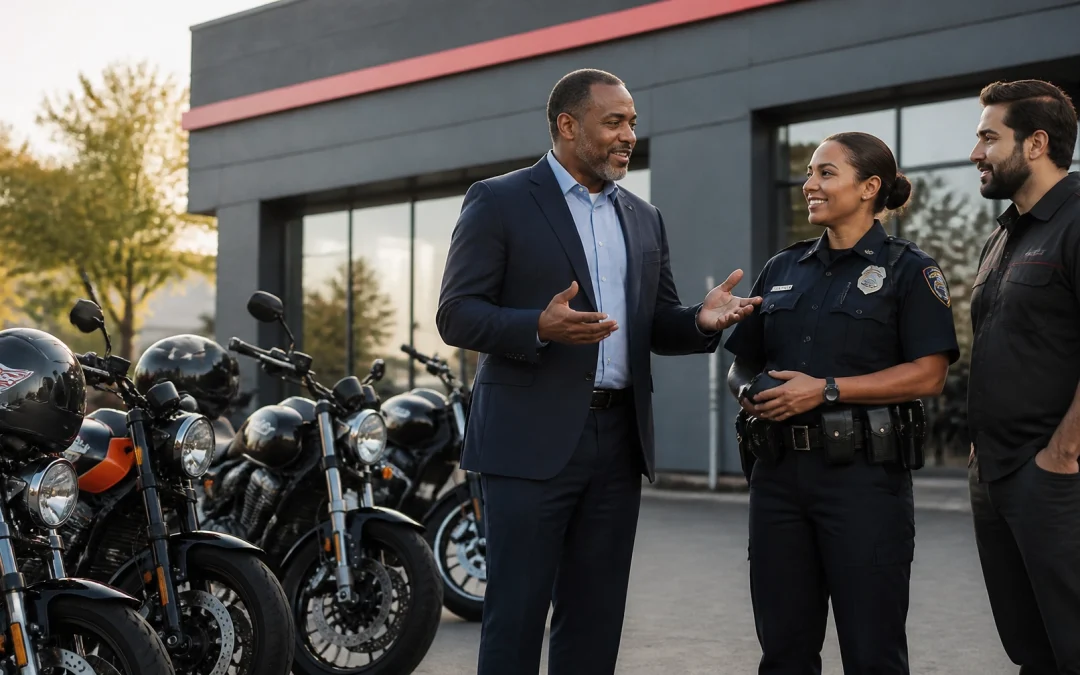
The program, now in its fifth year, brings together the Maryland Department of Transportation Motor Vehicle Administration, the Maryland State Police, local law enforcement motor officers, and motorcycle dealerships. Free one-day classes have been hosted at locations including Harley-Davidson of Baltimore and Bob’s Motorcycles.
That location strategy matters.
Dealerships are already familiar places for riders. Customers visit them for service, parts, new motorcycles, used motorcycles, gear, events, and community gatherings. Adding structured safety education to that environment can make training feel more accessible and practical.
Maryland MOTORS includes:
- Classroom instruction on visibility, lane positioning, defensive riding, and risk management
- Motorcycle safety checks
- Mentored road rides led by experienced motor officers
- Low-speed control exercises
- Direct feedback from instructors
- Participation for licensed riders with different levels of experience
This is not only a beginner program. Experienced riders can also benefit from a professional review of habits that may have developed over time. Even confident riders can become more precise with braking, cornering, spacing, and hazard awareness.
How is that for useful irony? A rider may have decades of experience and still discover one small habit that needs improvement.
Maryland reported 49 motorcycle-involved fatalities in 2025. That figure reinforces why continued training and shared responsibility are necessary. The state’s motorcycle safety resources at ZeroDeathsMD.gov also emphasize that riders and drivers must work together to reduce serious injuries and deaths.
The broader lesson is clear: a dealership can be more than a showroom. It can become a trusted safety hub.

Illinois Demonstrates How Training Can Scale
Illinois provides another important model through the Cycle Rider Safety Training Program, commonly known as CRSTP.
Created by statute in 1976 and administered through the Illinois Department of Transportation, the program offers free motorcycle training to Illinois residents age 16 and older who meet the program’s license or permit requirements. More than 400,000 students have been trained since the program began.
The program serves riders across skill levels and combines classroom education with hands-on riding practice. Graduates age 18 and older may also receive a license waiver for the written and riding portions of the state motorcycle examination, depending on the course completed and applicable requirements.
Illinois has also developed a notable funding structure. CRSTP is funded by motorcyclists through portions of motorcycle license endorsement and plate fees. Those funds are restricted to uses directly related to motorcycle training.
That approach creates a clear connection:
- Motorcyclists contribute to a dedicated safety fund.
- The state uses that funding to provide accessible training.
- Riders gain knowledge and skills.
- The public benefits from a stronger safety culture.
Illinois also reports that motorcyclists represent more than 10% of the state’s total roadway fatalities. That makes motorcycle training a significant roadway safety priority, not a niche program.
The Illinois IDOT motorcycle training page provides information about course benefits, regional training centers, eligibility, and license waivers.
For state officials and industry leaders, Illinois raises an important planning question: How can dedicated motorcycle safety funding support a broader network of dealership-based training locations?
Why Dealerships Are Natural Safety Partners
Dealerships have several advantages that government agencies may not have on their own.
They have direct access to riders. Dealerships interact with new riders, returning riders, touring riders, sport riders, older riders, and customers who may not otherwise seek formal training.
They have physical locations. Many dealerships offer parking areas, service facilities, classrooms, event spaces, and access to nearby roads that can support organized education.
They understand the customer journey. Dealership leaders know when riders are buying their first motorcycle, changing to a heavier model, returning after a long break, or preparing for a major trip.
They have established communication channels. Email lists, social media pages, service reminders, owner events, and customer relationships can help safety campaigns reach the right audience.
They can connect training to practical decisions. A class can include discussions about protective gear, tire condition, braking systems, visibility, luggage, maintenance, and motorcycle fit without turning the event into a sales presentation.
That last point is important. A safety program must remain credible. The public agency should set the safety objectives and evaluation standards. The dealership can provide access, logistics, and community reach. Professional instructors should lead the training.
This division of responsibility protects the integrity of the program while making it easier to operate.
A Partnership Model for More States
A state DOT and dealership partnership could be organized around a simple framework.
1. Identify priority regions
Use crash data, rider population, roadway conditions, training availability, and community input to determine where additional classes are needed.
2. Recruit dealership partners
Look for dealerships with suitable space, strong customer communication, professional staff, and a willingness to support public education.
3. Establish consistent curriculum
Training should address core topics such as:
- Hazard recognition
- Braking and emergency maneuvers
- Low-speed control
- Lane positioning
- Visibility
- Intersections
- Following distance
- Protective equipment
- Impaired and distracted riding
- Sharing the road with other motorists
4. Include real-world coaching
Classroom education is valuable, but mentored riding and closed-course practice help riders translate knowledge into action.
5. Measure outcomes
Programs should track enrollment, completion, rider feedback, skill assessments, geographic reach, repeat participation, and available crash indicators. Measurement helps agencies improve the program and supports future funding.
6. Build a public awareness campaign
Training works best when supported by clear messaging for both riders and drivers. “Look twice” messaging, safe following distance, visibility, protective gear, and responsible riding should appear across digital media, dealerships, state channels, and community events.

What Each Stakeholder Brings to the Table
A coordinated program becomes stronger when every stakeholder has a defined role.
- State DOTs provide leadership, data, funding coordination, and public accountability.
- NHTSA and federal partners can provide research, campaign guidance, and national consistency.
- Manufacturers can support technical education, safety technology, and responsible rider outreach.
- Dealerships provide locations, customer access, event support, and local credibility.
- Training organizations deliver qualified instruction and skills evaluation.
- Law enforcement motor officers bring practical road experience and professional coaching.
- Riders provide feedback, participation, peer leadership, and community reach.
- Media partners expand awareness through video, digital campaigns, social content, and storytelling.
Ride Fear Free exists to help pull these stakeholders together. Our mission is to support a coordinated national campaign that advances motorcycle safety and saves lives through training, advertising, education, media, and public-private collaboration.
Readers can explore the Ride Fear Free blog for additional motorcycle safety and industry coverage. Our About Us page also explains how Ride Fear Free connects training, outreach, digital marketing, and motorcycle industry partnerships. For video programming, visit the Ride Fear Free YouTube show.
The Practical Takeaway
State DOTs do not need to build every safety program alone. Dealerships do not need to operate as government agencies. Each group can contribute its strongest capability.
Maryland shows how free classes, law enforcement instruction, and dealership locations can create a practical local model. Illinois shows how a state-supported program can scale over time through dedicated funding and structured delivery.
The next step is to connect these ideas more consistently across the country.
If you represent a DOT, NHTSA, motorcycle manufacturer, dealership group, training organization, or rider community, consider starting with one question:
Where could a public-private motorcycle safety class reach riders who are not being reached today?
That answer could identify the next training site, the next community partner, and the next opportunity to prevent a serious crash.
Let’s Build Safer Riding Partnerships
Ride Fear Free, LLC works with motorcycle industry leaders, government agencies, dealerships, trainers, and safety advocates to develop coordinated awareness and education campaigns.
Learn more: https://ridefearfree.net
Call or text AI Receptionist: (970) 703-0580
Email: dan@dakdan.com
Dan Kost, CEO: Connect on LinkedIn
Subscribe on YouTube: Ride Fear Free YouTube
Watch, comment, subscribe, and share this post with a transportation official, dealership leader, instructor, or motorcycle industry professional. A stronger safety network begins when the right people start the conversation.
Share This Post
#Motivation #Branding #Strategy #Marketing #AdvertisingAndMarketing #digitalmarketing #Innovation #Sports #DanKost #RideFearFree #MotorcycleSafety #NHTSA #DOT #RiderTraining #DealershipPartnerships
