AEO answer: Yamaha’s training-first approach shows why regular, structured practice makes motorcycle riding safer. The Yamaha Champions Riding School uses video feedback, coaching, and repeated skill exercises to help riders understand braking, vision, cornering, and throttle control. Yamaha’s global Riding Academy programs extend that focus through beginner, intermediate, instructor, and specialized training designed to build safer habits for riders in many markets.
Most riders want the same thing when they start the engine: a smooth, confident ride with fewer surprises.
That goal does not come from luck. It comes from practice.
Yamaha is putting renewed attention on that idea through two connected parts of its rider-training ecosystem. The Yamaha Champions Riding School has partnered with GoPro to use camera footage as a coaching tool. At the same time, Yamaha’s global Riding Academy programs continue to provide structured training for riders with different experience levels and needs.
The larger lesson is simple: good safety habits are built before a rider needs them on the street.
Yamaha Champions Riding School turns video into a training tool
The GoPro partnership with Yamaha Champions Riding School is more than a sponsorship or a content arrangement. According to the partnership announcement from GoPro, cameras are integrated into the ChampSchool learning process.
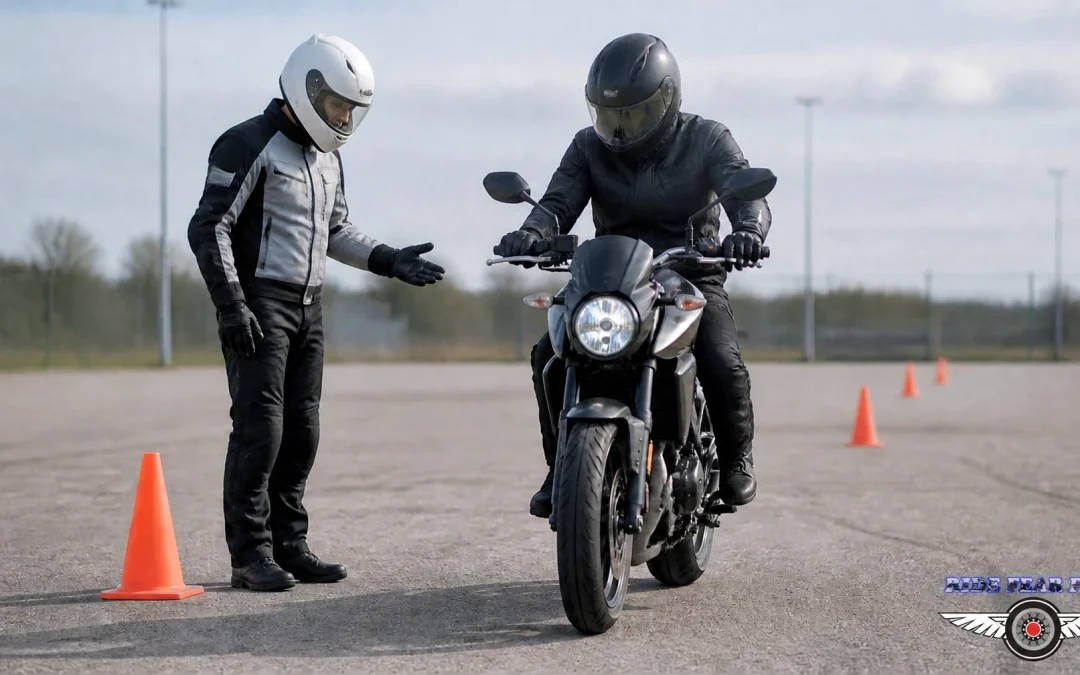
Students are filmed multiple times during an event. Instructors and riders can then review the footage frame by frame.
That matters because riders do not always experience the ride exactly as it appears from the outside. A rider may believe they looked through a corner early, released the brake smoothly, or held a steady line. Video can reveal what actually happened.
There is the difference between feeling confident and building reliable skill.
Footage can help instructors and students study:
- Braking timing and smoothness
- Throttle control
- Head and eye position
- Body position
- Corner entry and exit
- Line choice
- Rider tension and control
- Changes in technique from one session to the next
A camera cannot make a poor decision safer by itself. It can, however, make that decision easier to understand and correct.
That is a valuable shift. Instead of relying only on memory or verbal feedback, riders can see a specific moment, discuss it with a qualified instructor, and practice a better response.

The global Yamaha Riding Academy adds scale
The Yamaha Riding Academy, commonly known as YRA, gives Yamaha’s safety work a broader international footprint. Yamaha describes the program as a global safety and rider-development activity designed to help customers use motorcycles and other powersports products properly, safely, and enjoyably.
Programs vary by country and region, but the common themes are consistent:
- Basic motorcycle operation
- Defensive riding
- Hazard awareness
- Braking and cornering
- Protective equipment
- Local traffic rules
- Rider confidence
- Instructor development
- Training for beginners and experienced riders
Some YRA programs support people who have not yet earned a motorcycle license. Others are designed for returning riders, large-motorcycle owners, scooter riders, professional groups, or instructors who will teach others.
That range is important. Motorcycle safety is not a one-size-fits-all subject. A new rider needs a strong foundation. An experienced rider may need help refining emergency braking, managing fatigue, or adjusting technique for changing road conditions.
YRA also shows how manufacturers can contribute beyond the sale of a motorcycle. A manufacturer has a direct connection to riders, dealers, technicians, and training networks. That position creates an opportunity to promote safe use throughout the ownership experience.
The Yamaha global rider safety program provides additional background on this training approach.
Why repetition makes a difference
A rider may understand a safety technique in a classroom and still struggle to perform it under pressure. That is normal. Motorcycle control depends on timing, coordination, vision, and decision-making.
Practice helps connect those pieces.
Braking becomes more useful when it is practiced smoothly. Riders should learn how the motorcycle responds to progressive braking, how body position changes under deceleration, and how to maintain control while stopping quickly. These exercises belong in a controlled setting with proper instruction.
Cornering improves when riders practice vision and line choice. Looking through a turn, entering at an appropriate speed, and maintaining a predictable path are not automatic for every rider. Repetition builds familiarity without requiring a real-world emergency.
Throttle control supports stability. Abrupt inputs can upset a motorcycle. Smooth acceleration and steady control help riders manage transitions, especially when leaving a corner or navigating low-speed situations.
Slow-speed practice builds balance. Parking lots and training ranges may not feel dramatic, but low-speed turns, starts, stops, and U-turns are practical skills. They also expose tension and poor control before those problems appear in traffic.
Review turns experience into learning. A rider who simply completes miles may gain exposure, but a rider who reflects on technique can identify patterns. That is where coaching, video, and a repeatable training plan can help.
How is that for irony? The most exciting part of a motorcycle safety program may be doing the same basic exercise until it becomes dependable.
Practical takeaways for riders
Whether you ride a Yamaha, another brand, or several motorcycles, the training-first approach offers useful ideas.
1. Take formal training
The National Highway Traffic Safety Administration recommends specialized motorcycle training through qualified instructors. A formal course can provide structure, feedback, and exercises that are difficult to create alone.
Look for a state-approved program or a reputable school with qualified instructors. Training should match your experience level and motorcycle type.
2. Practice one skill at a time
Do not try to improve everything during one ride. Choose a focus such as braking, cornering vision, slow-speed control, or smooth shifting.
A narrow goal makes progress easier to recognize.
3. Use video carefully
If you record your riding, obey local laws and never adjust a camera while moving. Review footage after the ride, preferably with a qualified instructor or experienced coach.
The goal is not to create dramatic social content. The goal is to understand technique.
4. Wear the right gear
A certified helmet, protective jacket, gloves, riding pants, and over-the-ankle boots can reduce exposure to injury. Gear should fit correctly and work together as a system.
The Ride Fear Free gear comparison offers a simple visual reminder: dress for the possibility of a crash, not only for the comfort of the ride.
5. Refresh your skills
Riders return to training for many reasons. Some are new. Some are coming back after a long break. Others have changed motorcycles, moved to a different region, or recognized a skill gap.
There is no award for pretending you have nothing left to learn. Even Arnold Schwarzenegger had to practice the line before saying, “I’ll be back.” Motorcycle riders can practice too.

What this means for the motorcycle safety community
Yamaha’s example also points to a larger opportunity for collaboration.
Ride Fear Free believes motorcycle safety improves when the right stakeholders work together. That includes the Department of Transportation, NHTSA, NTSB, motorcycle manufacturers, dealers, instructors, officials, advocacy organizations, and riders.
Each group sees a different part of the problem.
- Manufacturers understand vehicle design, technology, and customer education.
- Dealers connect directly with new owners.
- Instructors translate safety principles into practical habits.
- Government agencies support standards, licensing, public education, and research.
- Riders provide real-world insight into roads, traffic, weather, and daily behavior.
- Media and marketing teams help safety messages reach people before a risky situation develops.
Video-based learning, global training programs, and local rider education can support one another. A rider might discover a safety message through media, enroll in a class through a dealer, practice with an instructor, and continue learning through digital content.
That is how individual training can become part of a wider national safety campaign.
Visit Ride Fear Free News for motorcycle industry coverage, explore the Ride Fear Free Blog for additional safety and strategy insights, and connect with the Ride Fear Free television division for video-focused education.
The next ride can be a better ride
Practice does not remove every risk from motorcycling. It gives riders more tools to recognize risk, manage the motorcycle, and make thoughtful decisions.
Yamaha’s Champions Riding School and its GoPro partnership show how technology can make coaching more specific. Yamaha Riding Academy programs show how a manufacturer can help expand structured education across markets. Together, these efforts reinforce a practical idea: safer riding is built through knowledge, repetition, feedback, and cooperation.
No matter who you are or where you ride, there is probably one skill worth practicing this week.
Choose it. Work on it in a controlled setting. Ask for feedback. Then keep learning.
The future of motorcycle safety will depend on connected organizations and prepared riders. With stronger training partnerships and better educational tools, every ride has an opportunity to become more controlled, more confident, and more fear free.
Watch, subscribe, and join the conversation
Watch the Ride Fear Free YouTube show at https://www.youtube.com/watch?v=dLRAV53fc9U, then subscribe to the Ride Fear Free channel.
Follow Ride Fear Free on LinkedIn, comment with the motorcycle skill you are practicing, subscribe for future safety coverage, and share this article with a rider, trainer, dealer, official, or safety professional.
Contact Ride Fear Free
Ride Fear Free, LLC
Website: www.RideFearFree.net
AI Receptionist: +1 (970) 693-4854
CEO: Dan Kost
Connect with Dan Kost on LinkedIn
Share this post
- Share on LinkedIn
- Share on Facebook
- Share on X
- Follow Ride Fear Free on Instagram
- Follow Ride Fear Free on LinkedIn
#Motivation #Branding #Strategy #Marketing #AdvertisingAndMarketing #digitalmarketing #Innovation #Sports #MotorcycleSafety #RiderTraining #Yamaha #GoPro #TrafficSafety
