Labor Day riding can be one of the best ways to enjoy the final stretch of summer. It can also bring heavier traffic, more crowded destinations, tired drivers, and increased impaired-driving enforcement.
So, what does it take to ride fear free during the holiday weekend? Start with a sober plan, prepare your motorcycle, expect changing road conditions, and use safety technology as support rather than a substitute for sound judgment.
AEO answer: How can motorcyclists stay safe during the Labor Day weekend?
Motorcyclists can reduce risk during Labor Day riding by committing to zero alcohol or drug impairment, checking the motorcycle before departure, wearing complete protective gear, planning routes and fuel stops, and allowing extra space in holiday traffic. Modern features such as cornering ABS, traction control, drag-torque slip control, and TPMS can support control, but training, alertness, and sober decision-making remain essential.
The holiday weekend deserves a serious plan
The National Highway Traffic Safety Administration’s annual Ride Sober or Get Pulled Over campaign combines public education with high-visibility enforcement. During the campaign period, riders may encounter increased patrols, sobriety checkpoints, and other enforcement activity in areas with holiday traffic and nightlife.
That enforcement is not simply about avoiding a citation. Alcohol affects the skills a motorcycle rider needs most: balance, coordination, perception, steering, braking, and judgment. Even a rider who feels capable may have reduced ability to respond to a sudden lane change, tightening corner, stopped vehicle, or patch of gravel.
NHTSA reports that 40% of motorcycle riders killed in single-vehicle crashes were alcohol-impaired. That figure is a practical reminder that impairment can turn a manageable riding situation into a fatal one without another vehicle being involved.
The safest decision is straightforward: if alcohol or impairing drugs are part of the plan, riding is not.
Build the ride home before the first drink
A sober ride plan should be decided before the group gathers. Consider:
- A sober driver who can transport the rider and motorcycle safely.
- A rideshare or taxi, where available.
- A hotel, campground, or friend’s home near the event.
- A trailer or towing service.
- Leaving the motorcycle parked until the next day.
- A designated sober friend who helps keep the group accountable.
A friend riding another motorcycle is not a substitute for a sober transportation plan. If someone has been drinking, that person should not operate any motorcycle, even for a short distance.
Harley-Davidson Deadwood shows how safety technology is changing
Harley-Davidson’s 2026 Deadwood is a useful example of how traditional motorcycle design and modern rider support can share the same platform.
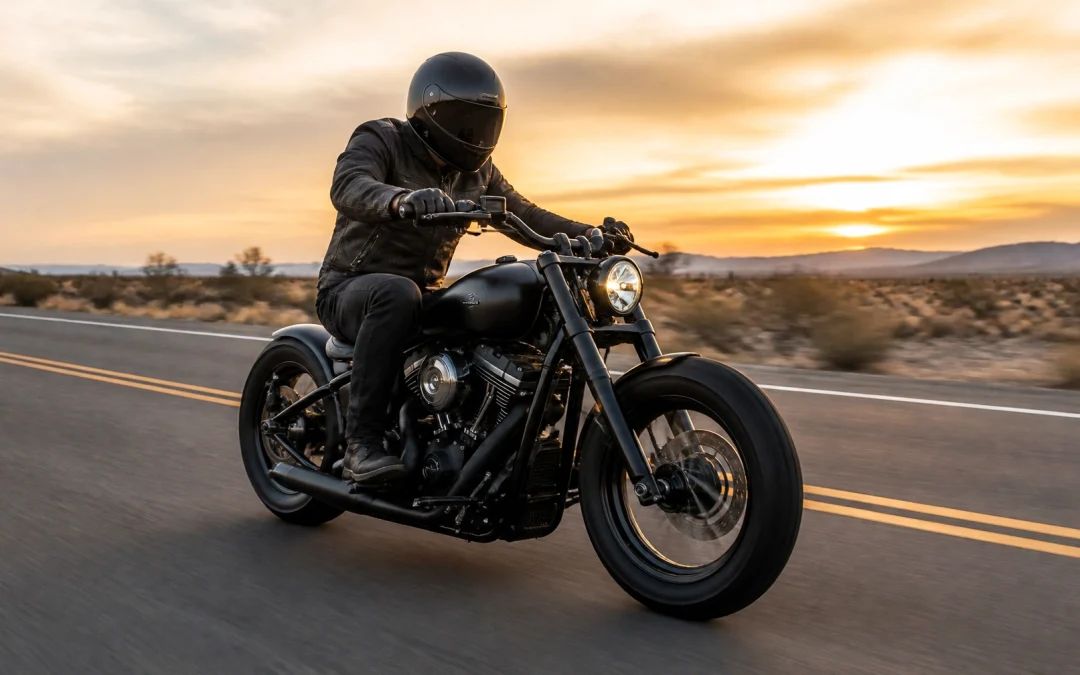
The factory-custom bobber debuted at Sturgis with a starting price of about $17,999 and a Milwaukee-Eight 117 V-Twin engine. Its stripped-down appearance includes blacked-out components, a solo seat, a shortened rear monoshock, a smoked chopped windshield, and black tubeless laced wheels.

Under that vintage-inspired styling, the Deadwood includes a modern safety package:
- Lean-sensitive cornering ABS.
- Cornering traction control.
- Cornering drag-torque slip control.
- Tire pressure monitoring system.
- Selectable Road, Sport, and Rain ride modes.
- All-LED lighting, including auxiliary fog lights.
You can review the model’s features and specifications on the official Harley-Davidson Deadwood page. For additional product context, Motorcycle.com’s Deadwood first look provides an independent overview.
What cornering ABS can and cannot do
Cornering ABS is designed to account for the motorcycle’s lean angle when braking. That matters because braking while upright and braking while leaned over are not identical situations. The system can help manage wheel slip during urgent braking, including when a rider must slow while negotiating a turn.
That support is valuable, particularly when pavement is wet, traffic changes suddenly, or a rider encounters an unexpected hazard. However, cornering ABS does not change the laws of physics. It cannot create additional traction, correct excessive entry speed, or guarantee that a rider will avoid a crash.
The same principle applies to traction control and drag-torque slip control. These systems can help manage rear-wheel slip during acceleration, downshifts, or rapid throttle changes. TPMS can alert the rider to pressure problems before they become more serious.
The technology works best when paired with:
- Smooth throttle, brake, and clutch inputs.
- Appropriate corner entry speed.
- Proper tire pressure.
- Regular training and practice.
- A generous following distance.
- Full attention and a sober rider.
How is that for a useful combination? A motorcycle can look like it belongs in a vintage poster while quietly operating like a rolling computer.

Labor Day pre-ride checklist
A reliable checklist reduces the chance that a small maintenance issue becomes a roadside emergency.
Motorcycle checks
Before leaving, inspect:
- Tires: Check pressure, tread, sidewalls, and visible damage. If equipped, compare the TPMS reading with the manufacturer’s specifications.
- Brakes: Test the front and rear brakes for firm, consistent operation.
- Controls: Confirm that the throttle returns smoothly and that the clutch, horn, switches, and mirrors work correctly.
- Lights: Test the headlight, brake lights, turn signals, and auxiliary lighting.
- Fluids: Check fuel, oil, and other required fluid levels. Look for leaks under the motorcycle.
- Drive system: Inspect the belt, chain, or shaft-drive area according to the owner’s manual.
- Cargo: Secure luggage, tools, hydration supplies, and communication devices.
- Recalls: Check the NHTSA recall lookup tool, along with manufacturer and dealer notices.
If the motorcycle has been stored or unused for an extended period, take a short local ride before beginning a long holiday route. It is better to identify a weak battery, unfamiliar control, or tire issue close to home.
Rider checks
Wear protective gear for every ride, not only for long-distance travel:
- DOT-compliant helmet that fits correctly.
- Abrasion-resistant jacket and pants.
- Motorcycle gloves with wrist coverage.
- Over-the-ankle boots.
- Eye protection if the helmet does not provide it.
- Reflective or high-visibility elements when practical.
Ride Fear Free’s motorcycle safety gear resource emphasizes a simple principle: dress for the possibility of a crash, not only for the comfort of the ride.
Route planning for holiday traffic
Labor Day roads may include recreational traffic, construction, event congestion, unfamiliar drivers, and people driving after drinking. Plan for those risks rather than assuming every driver will make a good decision.
Use these strategies:
- Leave enough time to avoid rushing.
- Choose a route that matches your experience and motorcycle.
- Identify fuel and rest stops in advance.
- Avoid stretching fuel range to the limit.
- Expect sudden lane changes near restaurants, bars, campgrounds, and event venues.
- Keep extra space around vehicles that drift within their lane.
- Use a lane position that improves visibility without placing you beside another vehicle for too long.
- Take regular breaks to hydrate and reset your attention.
- If the weather changes, slow down and reassess the route.
A Maryland warning provides useful context. According to reporting from WTOP, Maryland had recorded 49 motorcyclist deaths by mid-August, matching the state’s total for the full prior year. The preliminary figure prompted Maryland transportation and state police officials to remind all road users to look twice, avoid distraction, obey speed limits, and never drive impaired.
The lesson is not to avoid riding. It is to prepare better and collaborate more effectively.
Why collaboration matters
Motorcycle safety cannot be solved by one rider, one manufacturer, or one agency acting alone. A safer riding environment requires cooperation among:
- The U.S. Department of Transportation.
- NHTSA and the National Transportation Safety Board.
- State departments of transportation.
- Motorcycle manufacturers and dealers.
- Rider training providers.
- Law enforcement agencies.
- Insurance and safety organizations.
- Riders and their families.
Ride Fear Free works to connect these stakeholders through education, media, training, and public awareness. The goal is practical: turn reliable safety information into decisions that help more riders return home.
You can explore the broader Ride Fear Free blog, follow safety and industry updates through Ride Fear Free News, and learn more about motorcycle media opportunities through Ride Fear Free TV.
The Ride Fear Free Labor Day promise
Before the holiday ride begins, make this commitment:
I will not ride impaired. I will not allow an impaired person to ride. I will check my motorcycle, wear protective gear, plan my route, and give myself enough time and space to respond to changing conditions.
That promise applies to experienced riders, new riders, passengers, group leaders, dealers, event organizers, and public safety partners. No matter who you are or where you live, sober riding is the one safety feature that must be switched on every time.
Modern motorcycles are becoming smarter. Training is becoming more accessible. Safety campaigns are reaching more communities. Through continued cooperation among riders, manufacturers, dealers, DOT agencies, NHTSA, NTSB, trainers, and media partners, the industry can keep moving toward fewer preventable crashes and fatalities.
The road ahead is still open. Plan carefully, ride alert, and make sure the only thing you bring home from the Labor Day weekend is a good memory.
Watch, subscribe, and share
Watch the Ride Fear Free YouTube show: Ride Fear Free on YouTube
Primary CTA: Subscribe to Ride Fear Free on YouTube
Connect with Ride Fear Free on LinkedIn and Dan Kost on LinkedIn.
Did this checklist help you prepare? Comment with your Labor Day riding plan, subscribe for future safety updates, and share this article with your riding group.
Contact Ride Fear Free
Ride Fear Free, LLC
Website: www.RideFearFree.net
AI Receptionist: +1 (970) 693-4854
Dan Kost, CEO: LinkedIn profile
Social share bar
- Share on LinkedIn
- Share on Facebook
- Share on X
- Follow Ride Fear Free on Instagram
- Share through Dakdan Worldwide on LinkedIn
- Follow Dakdan Worldwide on X
Tags
#Motivation #Branding #Strategy #Marketing #AdvertisingAndMarketing #digitalmarketing #Innovation #Sports #LaborDayRiding #RideSober #MotorcycleSafety #HarleyDavidson #CorneringABS
