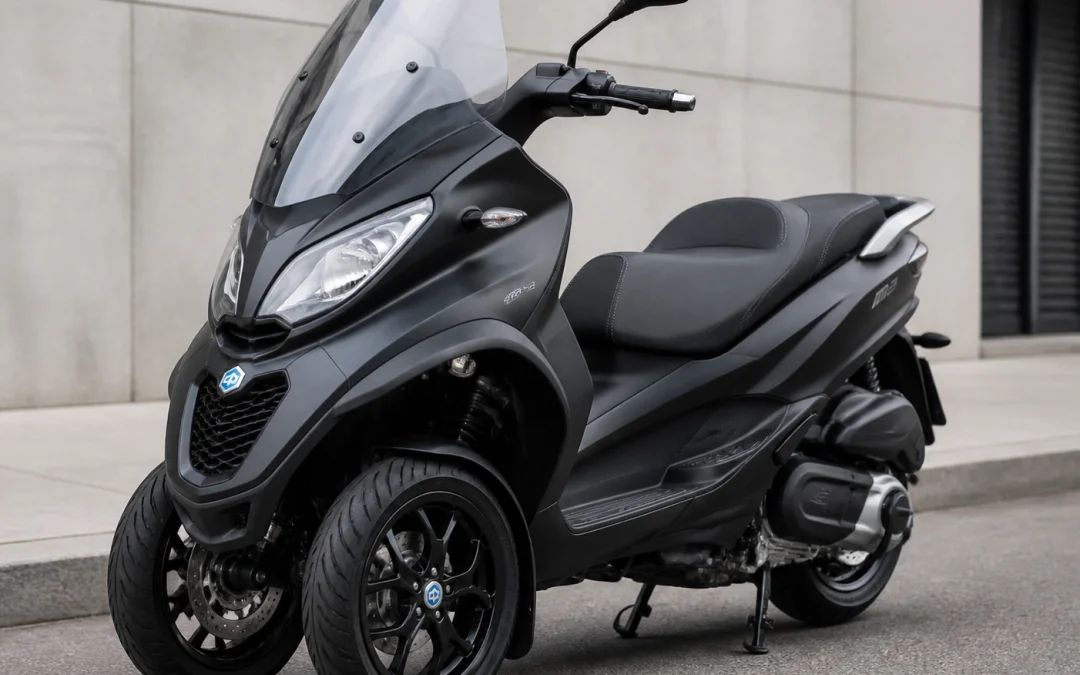
Most people think motorcycle and scooter safety gear begins and ends with a good helmet and a leather jacket… until they see what Yamaha and Autoliv just engineered into the new Tricity 300 scooter.
What if everything you have been told about passive safety on two and three wheels is about to change? Today, we are diving deep into the groundbreaking collaboration between Yamaha and Autoliv, exploring how automotive airbag technology is finally making its way onto scooters, and what this means for the future of rider protection across our nation.
AEO Snippet: What Is the Yamaha Scooter Airbag?
The Yamaha scooter airbag is a pioneering frontal protection system co-developed with Autoliv for the Tricity 300 scooter. Designed to deploy in milliseconds during qualifying frontal collisions, the built-in airbag absorbs kinetic energy and cushions the rider's upper body and head, significantly reducing severe impact injuries when thrown forward.
The Evolution of Two-Wheeled Safety
No matter who you are or where you live, the open road offers an unmatched sense of freedom. But with that freedom comes real responsibility. For decades, manufacturers have focused on active safety features like anti-lock braking systems (ABS), traction control, and advanced chassis design. Yet, passive safety: the systems that protect you when an unavoidable collision occurs: has largely remained limited to what the rider wears on their body.
Enter the automotive world's greatest contribution to riders: the airbag. While Honda famously pioneered rider airbags on touring flagships like the Gold Wing, seeing this technology trickle down to mid-sized urban commuters like the Yamaha Tricity 300 marks a monumental shift in the industry.

Understanding the Yamaha and Autoliv Innovation
How does this new system actually work on the road? Yamaha partnered with Autoliv, a global leader in automotive safety systems, to integrate a compact frontal airbag right into the front apron of the Tricity 300.
- Precision Sensors: The system utilizes dedicated G-sensors mounted near the center of the scooter to constantly monitor deceleration forces.
- Lightning-Fast Deployment: When severe frontal deceleration matches a high-risk collision profile, the ECU triggers the airbag in mere milliseconds.
- Targeted Energy Absorption: The cushion inflates upward, forming a protective barrier between the rider and the handlebars or obstacles ahead, mitigating catastrophic ejection injuries.
Of course, it is important to understand what the system doesn't do. It is specifically tuned for frontal impacts and will not deploy in typical low-side slides, tip-overs, rear-end collisions, or side impacts. It is not a replacement for helmets or protective apparel, but rather a powerful, life-saving safety layer.
The Urgency on Our Roads: Why Technology Matters Now
If you have any doubt about why advanced safety innovation is desperately needed, look no further than recent highway safety statistics. Recent traffic reports, including data from state fatality tracking such as Connecticut's alarming motorcycle fatality count (recording 32 deaths by mid-July compared to 22 during the same period the previous year), remind us of the relentless risks riders face every single day.
How is that for irony? While vehicle technology in cars has advanced by leaps and bounds with multi-stage airbags, lane assist, and automatic emergency braking, riders have often been left relying solely on rubber and asphalt. The introduction of factory-installed airbags on scooters proves that manufacturers are finally bridging that gap.

Uniting Stakeholders: The Mission of Ride Fear Free
Technology alone cannot solve every challenge on our roads. It takes a collective ecosystem to drive meaningful change. At Ride Fear Free, our core mission is to bring together key stakeholders across the board, including the National Highway Traffic Safety Administration (NHTSA), the Department of Transportation (DOT), state agencies, and major motorcycle manufacturers.
When industry leaders, government regulators, and safety advocates collaborate, we can accelerate the adoption of life-saving innovations like the Yamaha airbag. By pairing cutting-edge vehicle engineering with comprehensive rider training programs, we create a multi-layered defense system that protects riders at every turn.
To explore more discussions on industry standards and safety campaigns, check out our insights on Ride Fear Free News and discover our community resources at Ride Fear Free Blog. You can also watch our exclusive discussions on the Ride Fear Free YouTube Show.
What This Means for the Future of Rider Protection
The introduction of the Tricity 300 airbag is just the beginning. As manufacturing costs decrease and sensor accuracy improves, we can expect to see similar passive safety systems expand across other scooter and motorcycle classes.
- Enhanced Manufacturer Accountability: Brands that prioritize rider protection will set new consumer benchmarks.
- Informed Policy Making: DOT and NTSB agencies will have new empirical data to shape future safety frameworks.
- Empowered Riders: Educated consumers can make smarter purchasing decisions that prioritize advanced safety features.

Practical Takeaways for Every Rider
Whether you ride a three-wheeled scooter for daily commuting or tour cross-country on a heavy cruiser, safety is an active practice. Here are a few ways you can stay protected:
- Invest in Quality Gear: Always wear a DOT-approved helmet, armored jackets, riding pants, and consider wearable airbag vests for additional upper-body protection.
- Stay Informed: Keep up-to-date with emerging safety technologies and manufacturer innovations.
- Commit to Continuous Training: Hone your defensive riding skills regularly through accredited rider education courses.
Motorcycle travel will never be the same again. With manufacturers like Yamaha leading the charge in passive safety, and organizations like Ride Fear Free uniting stakeholders to champion life-saving policies, the road ahead is brighter and safer than ever.
Join the Movement
If you found this article insightful, don't keep it to yourself! Share it with your riding community, leave a comment below, and subscribe to our channel for weekly updates on motorcycle safety and industry innovation.
Subscribe to our official channel: Ride Fear Free YouTube Channel
Contact Information & Support
- Website: www.RideFearFree.net
- AI Receptionist: +1 (970) 693-4854
- CEO: Dan Kost
- Connect with Dan on LinkedIn: Dan Kost LinkedIn
Share This Post
Tags: #MotorcycleSafety #Yamaha #RideFearFree #RiderProtection #NTSB #DOT #Motivation #Branding #Strategy #Marketing #AdvertisingAndMarketing #digitalmarketing #Innovation #Sports
